Thesis Motivation Review 2026
 James BevanUpdated October 29, 2026
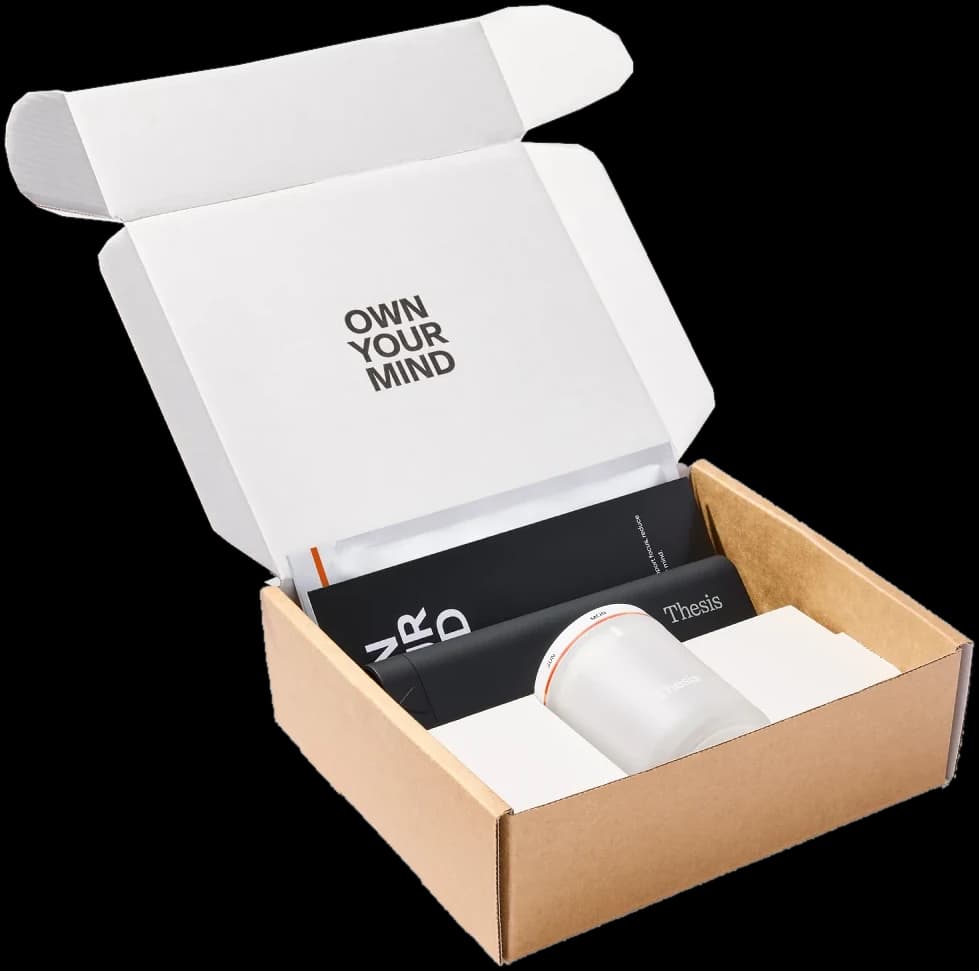
Thesis Motivation is the stimulant blend in Thesis's lineup, built around caffeine, theanine and two newer energy ingredients, methylliberine and theacrine. But do those newer ingredients do more than make you feel driven, and is a month of it worth the price? To find out, we've checked its six actives against the published studies, read the lab certificates Thesis links and its refund terms, and looked at what reviewers and buyers say.
Quick verdict
Our scientific audit
Buyer rating
- Price per serving$5.16
- Doses in range3 of 6
- Caffeine150 mg
- Money-back guarantee30 days
- Third-party testingPartly, raw ingredients only
- Servings per bottle25
Buying these ingredients as separate bottles, at the doses studies used, costs $2.77 a day less. See the list.
Better-rated alternatives
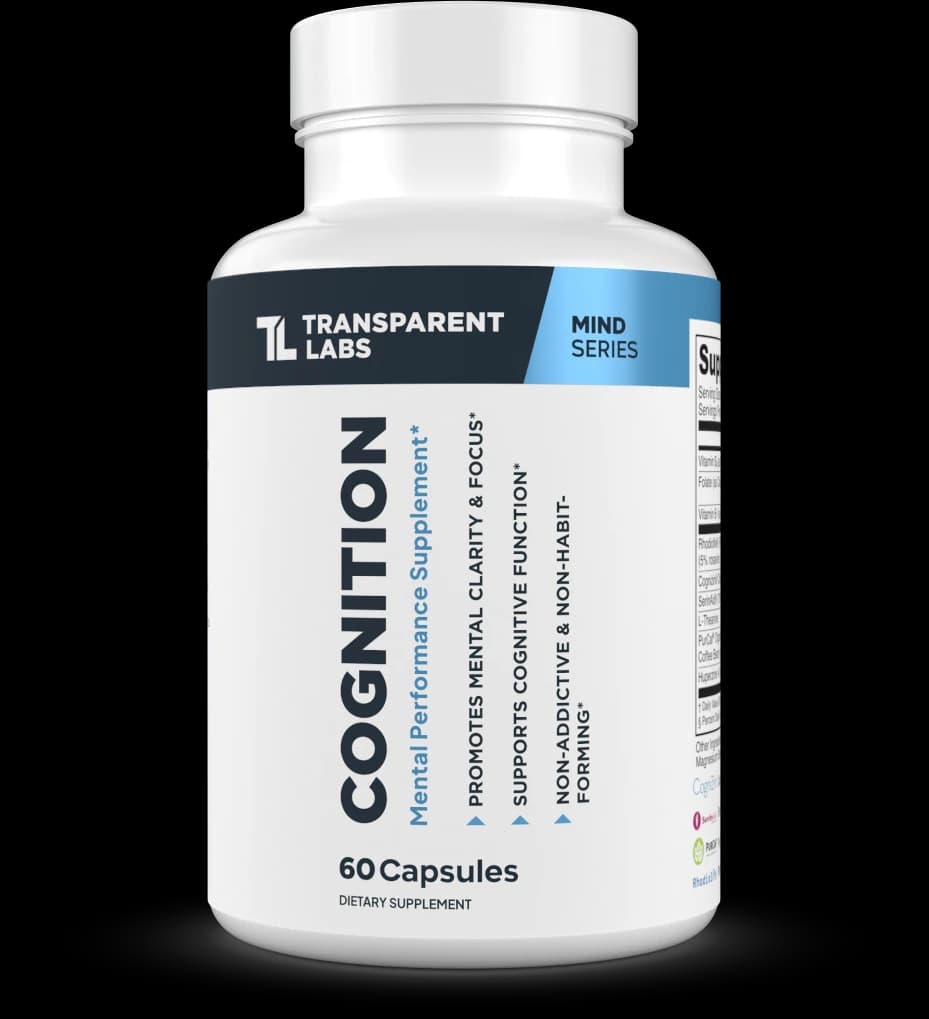 Transparent Labs CognitionScientific auditScientific audit 7.8/10Buyer ratingBuyer rating 9.7/10
4 of 6 ingredients at studied amounts
Shares 3 ingredients with Thesis Motivation
Check price$1.67 a day
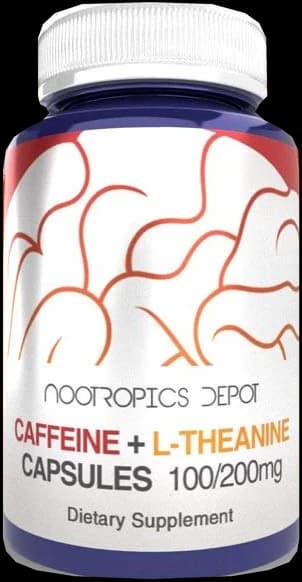 Caffeine + L-Theanine 100 mg / 200 mg CapsulesScientific auditScientific audit 9.4/10Buyer ratingBuyer rating 8.8/10
2 of 2 ingredients at studied amounts
Shares 2 ingredients with Thesis Motivation
Check price$0.33 a day
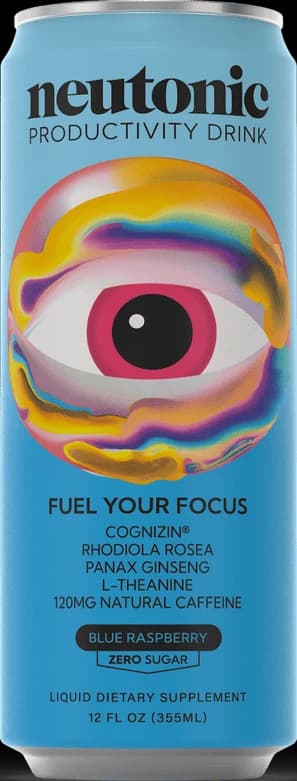 Neutonic Productivity DrinkScientific auditScientific audit 6.7/10Buyer ratingBuyer rating 8.6/10
3 of 5 ingredients at studied amounts
Shares 3 ingredients with Thesis Motivation
Check price$3.00 a day
We may earn a commission from links on this page, at no extra cost to you. How we make money
In this review
What's good, and what isn't
Pros
- Caffeine (150 mg), theanine (200 mg) and methylliberine (100 mg) are at the doses we use as benchmarks
- Every amount and branded form is printed, with the full panel on Thesis's Amazon store
- Buyers rate it 4.5 out of 5 across 15 ratings
Cons
- Theacrine is half its benchmark, and the tyrosine and rhodiola are far below theirs
- Lab certificates cover raw ingredients only, with none for the finished capsules
- There's no caffeine-free version, and the refund covers your first order only
Why Thesis Motivation scored 5.9 out of 10 in our scientific audit
- Dose fit40%67
Caffeine, theanine and methylliberine reach their benchmarks. Theacrine is half its 200 mg, and the rhodiola, as fermented salidroside rather than the studied root extract, and the tyrosine fall well short. The B6 and B12 aren't scored.
- Evidence30%44
Caffeine's evidence is strong and theanine's moderate. Methylliberine and theacrine have a few small trials that mostly measure how people feel, and the underdosed rows count for little.
- Transparency20%95
Every amount and branded form is printed, with nothing in a blend. It loses a few points because we read the panel from the brand's images rather than a bottle we bought.
- Testing10%0
Thesis links certificates for seven raw ingredients, including lab assays of its Dynamine and TeaCrine, but none for the finished capsules, and Motivation isn't listed by NSF.
Worked out under method audit-v2.0. How the rating is built
Score history
Oct 29, 2026 First audit published (5.9)
We checked the label, compared each dose with the human research and published the review.
We think 5.9 is about right, and it's a good score for a stimulant blend. Three of the six scored ingredients, caffeine, L-theanine and methylliberine, are at the amounts their studies used, and Thesis prints every dose. Where it drops points is the other three. Theacrine is half our benchmark, the rhodiola is a different form at a third of the amount, and the tyrosine is a small fraction of what its studies gave.
Testing scores zero. Thesis links lab certificates for seven raw ingredients, but none for the finished capsules, and a public report on a finished batch could add up to a full point.
The claims, checked

The panel matches our records, with two capsules a serving and 25 servings a month, and the other ingredients are a vegetable cellulose capsule, microcrystalline cellulose, magnesium stearate and silicon dioxide.2 Thesis's own site lists every active and amount, but it doesn't show the full panel, so the one place to see the other ingredients is the image on its Amazon store.12
The directions start you on one capsule in the morning to see how you tolerate it, then move up to the full two capsules if that goes well. The caution box warns against it if you're sensitive to caffeine, pregnant or nursing.1
“84% of people were more likely to start or complete a task”
PartlyThe product page shows this figure with a footnote that tells you where it came from.1 It's an open-label survey from September 2024 of at least 79 customers who'd used the previous formula for two months or more, and the footnote says "Participants received a $10 rebate for sharing their feedback." There was no placebo group, the formula has changed since, and the footnote still says updated claims "are expected by December 2025."
“Clinically-proven, powerhouse ingredients for game-changing benefits”
PartlyThat's the heading over the ingredient list.1 Caffeine and theanine have good research at these amounts, and Thesis's help center says the caffeine, Dynamine and TeaCrine combination "has been clinically studied."5 That study, though, gave 50 young men 125 mg of caffeine, 75 mg of Dynamine and 50 mg of TeaCrine, not Motivation's 150, 100 and 100 mg.15 We found no trial of Motivation itself.
“third-party tested”
PartlyThe badge is on the product page, which links certificates for seven of the eight ingredients.1 The two we read in full, for the Dynamine and TeaCrine, are lab assays of raw-material samples that Thesis sent in.89 There's no certificate for the rhodiola and none for the finished capsules, even though the help center says Thesis has "batch-specific COAs ... for all raw ingredients and finished goods."6 The page also says each batch passes microbial, heavy metal and potency tests, but no report for those is linked, and Motivation isn't listed by NSF.110
“If you don't feel 50% improvement in your cognitive focus area within 30 days, we'll refund you for your entire purchase.”
PartlyThe product page promises this, and the science page words it as "feel 48% more focused or get your money back."17 The dated refund policy is simpler and better for you. It gives a full refund including shipping, for any reason, within 30 days of delivery, but only on your first order.3 So the guarantee is real, it just doesn't cover your second box, and the help center adds a 45-day guarantee for orders from Thesis's Amazon store.4
What's inside, audited
6 ingredients checked, 3 within range, 3 short.
Within range (methylliberine, L-theanine, caffeine). Short (L-tyrosine, theacrine, rhodiola).
caffeine (anhydrous per the product page) · Strong evidence
Doses used in studies that showed a benefit
Thesis Motivation has 150 mg, between the 40 and 300 mg single doses used in studies that showed a benefit.16
Study dose benchmark from McLellan 2016, about 40 to 300 mg a dose, across the trials it reviews16
Caffeine is 150 mg, about a mug and a half of coffee, and research reviews find better alertness and attention from about 40 mg upward.16 This is the ingredient you'll notice first, and with methylliberine and theacrine alongside it, Motivation is built to feel stronger than its caffeine alone.
L-theanine · Moderate evidence
Doses used in studies that showed a benefit
Thesis Motivation has 200 mg, between the 100 mg single dose and the 400 mg a day used in studies that showed a benefit.3132
Study dose benchmark from Dassanayake 2023, One dose of 100, 200 or 400 mg31
Theanine is 200 mg, the amount most theanine research uses. A 2026 analysis of 31 randomized trials found faster choice reaction time after a single 200 mg dose,18 and in a four-week trial of 30 adults taking 200 mg a day, verbal fluency improved, although only in the people who started lowest.19
Methylliberine is 100 mg of Dynamine, the branded form its research used. The one trial of it on its own gave 25 healthy adults 100 mg a day for three days, then tested them on the fourth day around a fourth dose, and they felt more energetic, focused and motivated than on placebo, but their scores on two thinking tests didn't change.12 So it's well dosed, but the evidence is about how you feel rather than how you perform.
TeaCrine · Preliminary evidence
Doses used in studies that showed a benefit
Thesis Motivation has 100 mg. The study dose we use as this ingredient's benchmark is 200 mg, so it's 100 mg short.33
Study dose benchmark from Ziegenfuss 2017, 200 mg, single dose33
Theacrine is 100 mg of TeaCrine, half the 200 mg we use as the benchmark. An eight-week trial gave 60 young adults 200 or 300 mg a day and found no build-up of tolerance,13 and a 2024 study that compared 100 mg with 400 mg found only the larger dose reduced lapses in attention the next morning.14 At this amount, it's a supporting player.
N-Acetyl-L-Tyrosine · Moderate evidence
Doses used in studies that showed a benefit
Thesis Motivation has about 325 mg (400 mg N-acetyl L-tyrosine on the label). The study dose we use as this ingredient's benchmark is 2,000 mg, so it's 1,675 mg short.34
Study dose benchmark from Colzato 2013, 2,000 mg, single dose34
Tyrosine comes as 400 mg of N-acetyl-L-tyrosine, which supplies about 325 mg of tyrosine, roughly 1,675 mg short of the studies. The trials that found better working memory under stress used far more, around 150 mg per kilogram of body weight, which is about 10 g for an average adult.20 More isn't automatically better either, since higher single doses made working memory slightly worse in a study of older adults.21
SalidroPure fermented salidroside, not the root extract the studies used · Moderate evidence
Doses used in studies that showed a benefit
Thesis Motivation has 60 mg. The study dose we use as this ingredient's benchmark is 170 mg, so it's 110 mg short.30
Study dose benchmark from Darbinyan 2000, 170 mg a day, 2 weeks30
Rhodiola is 60 mg of SalidroPure, a fermented salidroside, not the SHR-5 root extract the trials used. That's 110 mg short of the 170 mg benchmark, from a two-week trial of night-shift physicians,30 and even a 100 mg dose of SHR-5 that helped students during exams was called probably too low by its own authors.22 The trial that helped adults with stress-related fatigue used 576 mg a day,23 so the rhodiola earns very little here.
Also on the label are vitamin B6 5 mg, vitamin B12 1,000 mcg. These have no cognitive dose range for people who aren't deficient, so they don't count toward the formula score.
Vitamin B6 comes as 5 mg of pyridoxal-5'-phosphate and B12 as 1,000 mcg of methylcobalamin. B12 supplements haven't been shown to improve thinking in people who aren't low in it,24 and the same goes for B vitamins and memory more broadly.25
Compare it yourself
Thesis Motivation against its closest matches
| Product |  Thesis MotivationThis review | 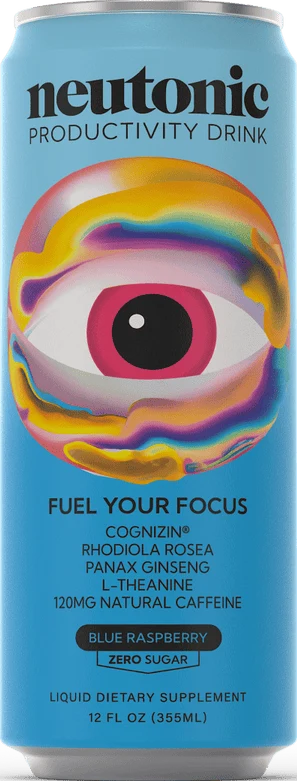 Neutonic Productivity Drink | 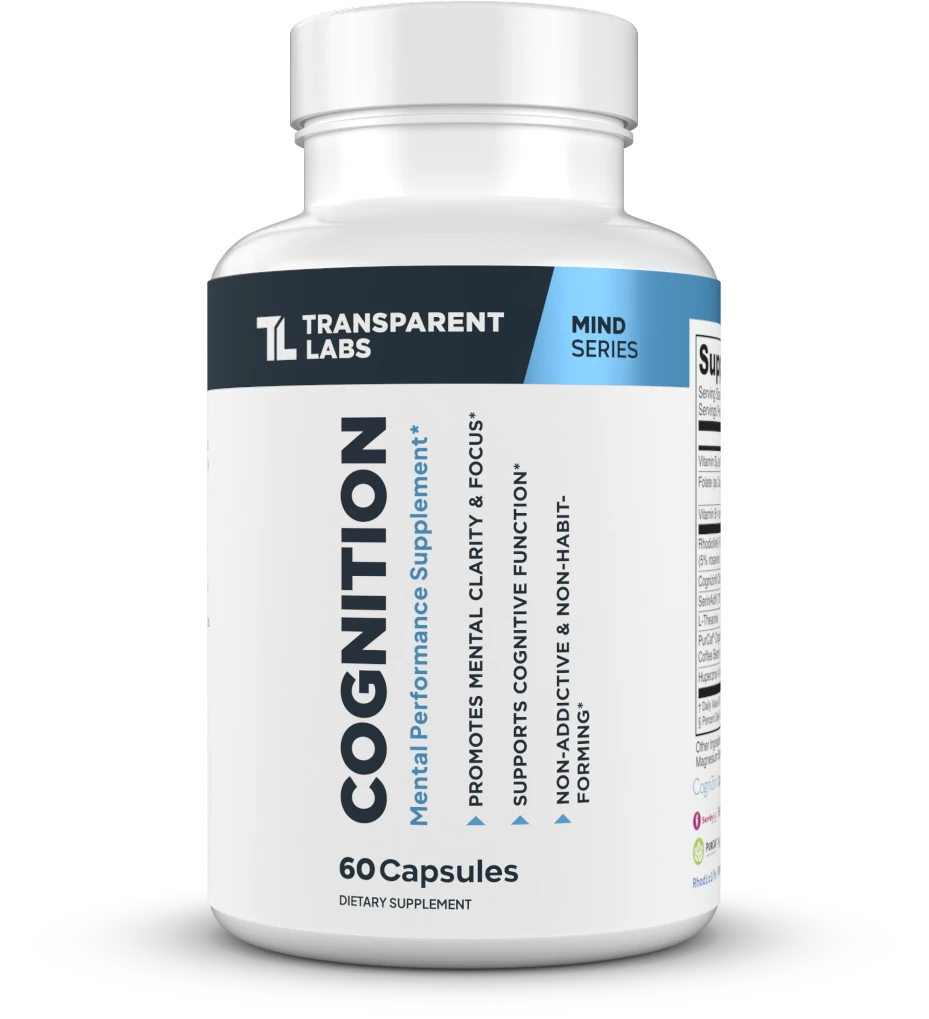 Transparent Labs Cognition | 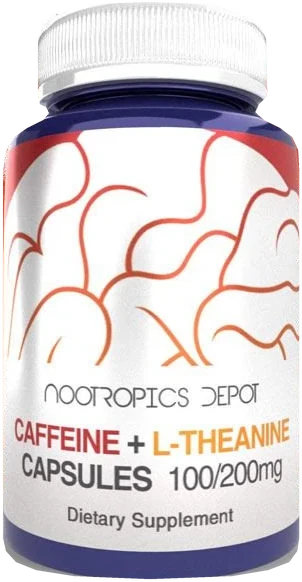 Caffeine + L-Theanine 100 mg / 200 mg Capsules |
|---|---|---|---|---|
| Scientific audit | 5.9/10 | 6.7/10 | 7.8/10 | 9.4/10 |
| Buyer rating | 9.0/10 | 8.6/10 | 9.7/10 | 8.8/10 |
| Price per serving | $5.16 | $3.00 | $1.67 | $0.33 |
| Doses of Thesis Motivation's ingredients | ||||
| Methylliberine | 100 mgDynamineAt or above the study dose benchmark | Not in formula | Not in formula | Not in formula |
| L-Tyrosine | 325 mg400 mg N-acetyl L-tyrosine on the label1,675 mg below the study dose benchmark | Not in formula | Not in formula | Not in formula |
| Theacrine | 100 mgTeaCrine100 mg below the study dose benchmark | Not in formula | Not in formula | Not in formula |
| L-Theanine | 200 mgL-theanineAt or above the study dose benchmark | 400 mgAt or above the study dose benchmark | 100 mgAt or above the study dose benchmark | 200 mgL-theanineAt or above the study dose benchmark |
| Caffeine | 150 mgcaffeine (anhydrous per the product page)At or above the study dose benchmark | 120 mgnatural caffeine, source not statedAt or above the study dose benchmark | 100 mgPurCaf organic caffeine from green coffee beanAt or above the study dose benchmark | 100 mgcaffeine (anhydrous per the product page)At or above the study dose benchmark |
| Rhodiola Rosea | 60 mgSalidroPure fermented salidroside, not the root extract the studies used110 mg below the study dose benchmark | 400 mgroot extract, no rosavin or salidroside standardization printedHalf credit | 600 mgRhodiolife, 5% rosavins, 1.8% salidrosideAt or above the study dose benchmark | Not in formula |
The products that share the most cognitive ingredients with Thesis Motivation are shown first. Any product sharing at least two can be added.
Transparent Labs Cognition is the closest caffeinated match, with 100 mg each of caffeine and theanine, 250 mg of citicoline and 600 mg of a standardized rhodiola, for $1.67 a serving. Vyvamind pairs 75 mg of caffeine with 150 mg of theanine, citicoline and tyrosine for $2.33.
If it's the caffeine and theanine you're after, Nootropics Depot's Caffeine + L-Theanine gives you 100 mg and 200 mg for 33 cents a capsule. Motivation's real difference is the methylliberine and theacrine on top, so those two ingredients are what the extra money buys.
Price and where to buy
Thesis sold a month's supply for $129.00 as a one-time order when we checked, which is $5.16 a serving.1 That's one of the higher prices per serving we've audited. The subscription is much cheaper, with a reduced first box and a lower monthly price after it, delivered every 25 days.1
Thesis also sells Motivation through its own Amazon store, as a refill pouch without the jar.11
- takethesis.com direct
- Listed price
- $129.00
- Per serving
- $5.16
- Status
- Order page live (1-month supply, one-time)
- Amazon (official store)
- Price
- Check price on Amazon
- Status
- Refill pouch, 50 capsules
What studied amounts cost separately
This section compares Motivation with buying each of its ingredients on its own, one bottle per ingredient, at the dose the studies started from.
Methylliberine 100 mg
Nootropics Depot Dynamine Methylliberine Capsules 100 mg (out of stock at the brand site when we checked)
1 capsule of 100 mg
L-tyrosine 2,000 mg
NOW Foods L-Tyrosine 750 mg, Extra Strength Capsules (not sold on the brand's site)
3 capsules of 750 mg, rounded up
Theacrine 200 mg
1 capsule of 100 mg
Ziegenfuss 2017 gave 200 mg, and when you take it with caffeine this label recommends one 100 mg capsule.
Caffeine 40 mg
1 capsule of 200 mg, rounded up
Bought separately
$2.39 a day
$71.68 for 30 servings
Thesis Motivation at takethesis.com
$5.16 a day
$154.80 for 30 servings
Buying separately saves $2.77 a day ($83.12 for 30 servings).
The list has the current cost a day for each. Buying them separately also lets you choose how much tyrosine and theacrine you take, which is where Motivation falls short.
What other reviewers say

Lift Big Eat Big
Written review, one tester for 60 days · James de Lacey · Mar 19, 2026
“Thesis has standout formulas and excellent ingredient choices but the high price and limited dosage transparency make it hard to fully recommend.”

Innerbody Research
Written review, team testing · Daniel Imperiale · Updated Mar 18, 2024
“The testers who felt an uptick in a sense of motivation described it more like a feeling of being able to follow through on tasks with less distraction and completion anxiety.”

Illuminate Labs
Written review with an ingredient analysis · Calloway Cook, medically reviewed by Taylor Graber, MD · Updated Jun 9, 2025
“Overall, we do not consider Thesis Motivation likely to be effective for improving cognitive function or productivity as we are unable to identify a single active ingredient that we would consider effective at the given dose, based on a review of clinical studies.”
Outliyr
Written review, one tester · Nick Urban · Updated Nov 13, 2024
“People either love or hate their Motivation blend.”
Most Thesis reviews online still describe the old Motivation, with phenylalanine, forskolin and artichoke. Lift Big Eat Big is the one that used the current formula, for 60 days, and describes "a clean 4-5 hour energy window without jitteriness or a hard crash," giving Thesis as a whole 3.5 out of 5.26 It also says there's a caffeine-free Motivation and that Thesis isn't sold on Amazon, and neither is true today.511 Innerbody and Outliyr rated the older formula 4.50 and 4.1 out of 5,2729 and Illuminate Labs doesn't recommend Thesis, while its tester rated it 3 out of 10.28
What buyers report
Safety notes
This is a strong stimulant blend. Each serving has 150 mg of caffeine, and methylliberine and theacrine act in similar ways, so add it to the coffee, tea and energy drinks you have that day and keep the caffeine under 400 mg, the most the FDA cites as not generally linked with harm in healthy adults.17 Start with one capsule in the morning, as the directions say, and don't stack it with pre-workouts or other stimulants.1
Thesis says not to use it if you're pregnant or nursing and to ask a healthcare professional first if you have a medical condition or take medication.1 That matters most if you take anything for blood pressure, heart rhythm, anxiety or ADHD. We're researchers, not doctors.
Final thoughts
Motivation is a well-built energy blend, with caffeine, theanine and methylliberine at the amounts their studies used and every dose on the label. What it isn't is a proven focus formula, since the newer ingredients' research mostly measures how people feel, three of its ingredients are underdosed, and no report on the finished capsules is published.
If you want a strong caffeinated lift and you'll try it on a subscription, the first-order refund gives you a fair way out. If caffeine bothers you, look elsewhere, because there's no version without it. Either way, start on one capsule in the morning and count it with your coffee.
FAQ
Does Thesis Motivation contain caffeine?
How many capsules do you take?
Is Thesis Motivation clinically proven?
Does Thesis have a money-back guarantee?
Is Thesis Motivation third-party tested?
What changed in the Motivation formula?
Is Thesis Motivation on Amazon?
Sources
34 sources cited
- Thesis (Outliers, Inc.). Motivation product page. Ingredients and amounts, directions and caution, one-time $129 for a month, subscription with a reduced first box then $79, the survey footnote (September 2024, previous formula, at least 79 customers, $10 rebate, updated claims "expected by December 2025"), "Clinically-proven" heading, "third-party tested" badge, testing block, linked raw-ingredient certificates, and the "50% improvement" guarantee. Accessed Oct 29, 2026. takethesis.com
- Thesis Motivation supplement facts panel, image on Thesis's Amazon store listing. 2 capsules per serving, 25 servings, the eight actives with amounts, other ingredients vegetable cellulose, microcrystalline cellulose, magnesium stearate, silicon dioxide. Accessed Oct 29, 2026. Label image
- Thesis. Shipping and return policy (last updated May 9, 2024). A full refund including shipping, for any reason, within 30 days of delivery of your first order, and refunds apply to the first order only. Accessed Oct 29, 2026. takethesis.com/policies/refund-policy
- Thesis help center. Do you offer refunds or returns? (updated June 4, 2026). First-order refund, and a 45-day satisfaction guarantee for purchases from the brand's Amazon store with proof of purchase. Accessed Oct 29, 2026. thesis.applied.guide
- Thesis help center. Why can't I get Motivation in the caffeine-free version? (updated June 4, 2026). "we don't offer a caffeine-free version of Motivation at this time", and the caffeine, Dynamine and TeaCrine blend "has been clinically studied". Accessed Oct 29, 2026. thesis.applied.guide
- Thesis help center. Do you have third-party testing? (updated June 4, 2026). "batch-specific COAs (Certificate of Analysis) for all raw ingredients and finished goods". Accessed Oct 29, 2026. thesis.applied.guide
- Thesis. The science page. "With Motivation, feel 48% more focused or get your money back." Accessed Oct 29, 2026. takethesis.com/science
- Certificate of analysis for Dynamine, client Outliers Inc., lot 49-KY20240303, report date Jan 23, 2025. HPLC assay 100.8%, ISO/IEC 17025-accredited lab, sample collected by client. Linked from the Motivation product page. Accessed Oct 20, 2026. Dynamine certificate (PDF)
- Certificate of analysis for TeaCrine, client Outliers Inc., lot 48-KY20240801, report date Jan 21, 2025. HPLC assay 100.7%, ISO/IEC 17025-accredited lab, sample collected by client. Linked from the Motivation product page. Accessed Oct 20, 2026. TeaCrine certificate (PDF)
- NSF International. Certified dietary supplement listings, search for Thesis Motivation. No matching products found. Accessed Oct 20, 2026. info.nsf.org
- Amazon US. THESIS Motivation with Dynamine & Theacrine, 50 capsules, refill sachet, sold by Take Thesis. 4.5 out of 5 from 15 ratings. Accessed Oct 23, 2026. amazon.com
- La Monica MB, et al. Methylliberine ingestion improves various indices of affect but not cognitive function in healthy men and women. Nutrients, 2023. 100 mg of Dynamine a day for 3 days, then testing on day 4 before and for 3 hours after a fourth dose, 25 adults, crossover. PMID 37960163
- Taylor L, et al. Safety of TeaCrine, a non-habituating, naturally-occurring purine alkaloid over eight weeks of continuous use. J Int Soc Sports Nutr, 2016. 200 or 300 mg a day for 8 weeks, 60 adults. PMID 26766930
- Gardiner CL, et al. Dose response effects of theacrine on cognitive performance and subsequent sleep. Sci Rep, 2024. 100 mg and 400 mg doses at three times of day. PMID 39562624
- Tartar JL, et al. A combination of caffeine, TeaCrine (theacrine), and Dynamine (methylliberine) increases cognitive performance and reaction time without interfering with mood in adult male egamers. Cureus, 2021. Caffeine 125 mg, Dynamine 75 mg and TeaCrine 50 mg, 50 male esports players. PMID 35103121
- McLellan TM, Caldwell JA, Lieberman HR. A review of caffeine's effects on cognitive, physical and occupational performance. Neurosci Biobehav Rev, 2016. PMID 27612937
- US Food and Drug Administration. Spilling the beans. How much caffeine is too much? 400 mg a day cited as not generally associated with negative effects for most adults. Accessed Oct 22, 2026. fda.gov
- Gerolymos C, et al. Cognitive and affective effects of L-theanine. A systematic review and meta-analysis of 31 randomized trials. Mol Psychiatry, 2026. PMID 42410082
- Hidese S, et al. Effects of L-theanine administration on stress-related symptoms and cognitive functions in healthy adults. A randomized controlled trial. Nutrients, 2019. 200 mg a day for 4 weeks, 30 adults. PMID 31623400
- Thomas JR, Lockwood PA, Singh A, Deuster PA. Tyrosine improves working memory in a multitasking environment. Pharmacol Biochem Behav, 1999. 150 mg/kg in 20 adults. PMID 10548261
- van de Rest O, et al. Dose-dependent effects of oral tyrosine administration on plasma tyrosine levels and cognition in aging. Nutrients, 2017. 100, 150 or 200 mg/kg, 17 adults aged 60 to 75. PMID 29168741
- Spasov AA, et al. A double-blind, placebo-controlled pilot study of the stimulating and adaptogenic effect of Rhodiola rosea SHR-5 extract on the fatigue of students caused by stress during an examination period. Phytomedicine, 2000. 100 mg a day for 20 days, 40 students. PMID 10839209
- Olsson EM, et al. A randomised, double-blind, placebo-controlled, parallel-group study of the standardised extract SHR-5 of the roots of Rhodiola rosea in the treatment of subjects with stress-related fatigue. Planta Med, 2009. 576 mg a day for 28 days, 60 adults. PMID 19016404
- Markun S, et al. Effects of vitamin B12 supplementation on cognitive function, depressive symptoms, and fatigue. A systematic review, meta-analysis, and meta-regression. Nutrients, 2021. 16 trials, 6,276 participants. PMID 33809274
- Clarke R, et al. Effects of homocysteine lowering with B vitamins on cognitive aging. Meta-analysis of 11 trials with cognitive data on 22,000 individuals. Am J Clin Nutr, 2014. PMID 24965307
- de Lacey J. Thesis nootropics review. Lift Big Eat Big, Mar 19, 2026. Overall rating 3.5 out of 5 for Thesis, one tester for 60 days, current Motivation formula. Accessed Oct 29, 2026. shop.liftbigeatbig.com
- Imperiale D. Thesis nootropics review. Innerbody Research, last updated Mar 18, 2024. Editor's Rating 4.50, previous formula. Accessed Oct 29, 2026. innerbody.com
- Cook C, Graber T (medical reviewer). Thesis nootropics review. Illuminate Labs, last updated Jun 9, 2025. No site score, the tester's own rating 3 out of 10, previous Motivation formula. Accessed Oct 29, 2026. illuminatelabs.org
- Urban N. Thesis nootropics review. Outliyr, updated Nov 13, 2024. 4.1 out of 5, previous Motivation formula. Accessed Oct 29, 2026. outliyr.com
- Darbinyan V, et al. Rhodiola rosea in stress induced fatigue. A double blind cross-over study of a standardized extract SHR-5 with a repeated low-dose regimen on the mental performance of healthy physicians during night duty. Phytomedicine, 2000. 170 mg a day for two weeks, 56 physicians. PMID 11081987
- Dassanayake TL, et al. Dose-response effect of L-theanine on psychomotor speed, sustained attention, and inhibitory control. A double-blind, placebo-controlled, crossover study. Nutr Neurosci, 2023. Single doses of 100, 200 or 400 mg, 32 young adults. Against placebo, only 100 and 200 mg improved simple reaction time. PMID 36263942
- Ritsner MS, et al. L-theanine relieves positive, activation, and anxiety symptoms in patients with schizophrenia and schizoaffective disorder. An 8-week, randomized, double-blind, placebo-controlled, 2-center study. J Clin Psychiatry, 2011. 400 mg a day for 8 weeks alongside antipsychotics, 60 patients. PMID 21208586
- Ziegenfuss TN, et al. A two-part approach to examine the effects of theacrine (TeaCrine) supplementation on oxygen consumption, hemodynamic responses, and subjective measures of cognitive and psychometric parameters. J Diet Suppl, 2017. A single 200 mg dose against placebo, 15 adults, crossover. PMID 27164220
- Colzato LS, Jongkees BJ, Sellaro R, Hommel B. Working memory reloaded. Tyrosine repletes updating in the N-back task. Front Behav Neurosci, 2013. A single 2.0 g dose. PMID 24379768
Where this data comes from
- Label source
- Supplement facts panel on Thesis's Amazon store (checked Oct 29, 2026), matching the product page's amounts
- Price source
- takethesis.com $129.00 for 25 servings
- Third-party testing
- Certificates for seven raw ingredients linked, none for the finished product, not listed by NSF
- How we reviewed it
- Label and evidence audit
Our scoring method, weights, and the rules that keep affiliate money away from scores are documented on the editorial process page.
Top Rated Nootropics is an independent research and review platform. We are passionate supplement researchers, not medical professionals. Always consult a qualified healthcare provider before starting any supplement regimen. These statements have not been evaluated by the Food and Drug Administration. These products are not intended to diagnose, treat, cure, or prevent any disease.