Alpha Brain Review 2026
 James BevanUpdated October 21, 2026
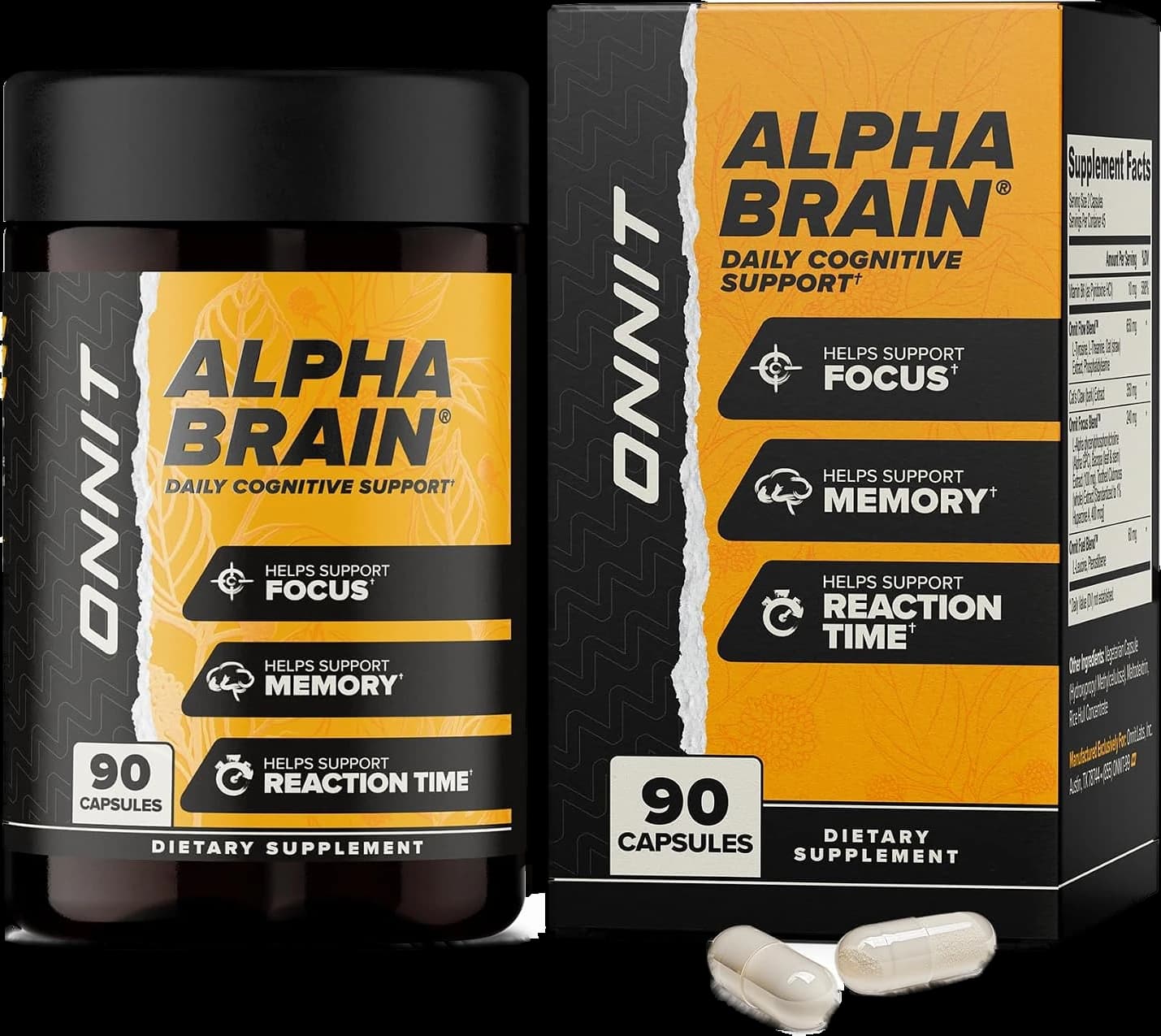
Alpha Brain is the brain supplement you've most likely heard recommended on a podcast, with Onnit promising better memory, focus and reaction time. But do those promises hold up, and does it matter that the label hides most of the amounts in blends? To find out, we've examined all 11 ingredients and Onnit's older labels, researched the published studies, and read what expert reviewers and over 73,000 Amazon buyers have to say.
Quick verdict
- Price per serving
- $1.78
- Doses in range
- 1 of 3
- Caffeine
- None
- Money-back guarantee
- 30 days
- Third-party testing
- Doesn't hold up, lapsed
- Servings per bottle
- 45
$1.07 a day more than our picks at the studied doses (two of its ingredients), see the list
Scored higher with similar ingredients
- Transparent Labs CognitionAudit rating 7.8/10
4 of 6 ingredients at studied amounts
Shares 3 ingredients with Alpha Brain
Check price$1.67 a day
4.9/5 from 66 buyers (brand site)
- VyvamindAudit rating 6.4/10
2 of 4 ingredients at studied amounts
Shares 2 ingredients with Alpha Brain
Check price$2.33 a day
3.9/5 from 79 Amazon buyers
We may earn a commission from links on this page, at no extra cost to you. How we make money
In this review
What's good, and what isn't
Pros
- A randomized, placebo-controlled trial of an earlier formula, which contained vinpocetine, found better delayed verbal recall and executive function than placebo in 63 healthy adults (Solomon 2016)
- Huperzine A at 400 mcg is inside the 400 to 800 mcg a day used in studies that showed a benefit, with the extract's standardization printed
- $1.78 a serving for the 90-count from onnit.com, with a first-purchase refund you don't have to return the bottle for
Cons
- Seven of the ten actives have no printed dose, because the 650 mg Flow Blend is split four ways and the 240 mg Focus Blend hides the alpha-GPC
- Bacopa is 100 mg with no standardization stated, 150 mg short of the study dose we use as that ingredient's benchmark. Cat's claw and 10 mg of B6 have no human cognitive evidence
- BSCG's registry says the product is "not currently certified", and no certificate of analysis is published
What our audit uncovered
We checked Alpha Brain's label, claims and certification, and these are the findings that matter most if you're buying.
Seven of ten actives are hidden in blends
The Flow, Focus and Fuel blends hide the doses of seven actives, including the theanine and phosphatidylserine.1
The BSCG certification has lapsed
BSCG's page for Alpha Brain now reads "This brand or product is not currently certified by BSCG," though some reviews still say it is.7
Its trial tested an earlier formula
The 2016 placebo-controlled trial used the version that contained vinpocetine, which today's label doesn't.81337
Onnit's guarantee pages disagree
The help article covers a first purchase of any Onnit supplement, while the refund-policy page still limits it to "select products under $40".45
Why Alpha Brain scored 3.7 out of 10
- Dose fit40%47
Only three printed doses can be scored, since vitamin B6 isn't. Huperzine A reaches the study dose we use as that ingredient's benchmark. Bacopa has 40 percent of its 250 mg floor and no standardization, so it earns part credit, and cat's claw has no human cognitive range, so it earns nothing for dose and only the minimum for evidence. The seven blend-hidden actives are left out rather than guessed.
- Evidence30%52
Evidence only counts in full when the dose matches the studies, and here only huperzine A's does. Solomon 2016, a peer-reviewed placebo-controlled trial of an earlier Alpha Brain formula, adds the 10-point product-trial bonus, because its full trial group beat placebo on delayed recall and executive function.
- Transparency20%15
Three proprietary blends hide the dose of seven of ten actives, including the theanine and phosphatidylserine that carry the formula's best evidence. The two numbers printed inside the Focus Blend are the only reason alpha-GPC can be worked out at all.
- Testing10%0
BSCG's registry says Alpha Brain is "not currently certified", and Onnit publishes no lab report. Innerbody reports that Onnit tests in-house without sharing the results, and the product isn't listed by NSF or USP. The IGEN non-GMO badge on the product page tests for GMOs, not potency or contaminants.
Worked out under method audit-v2.0. How the rating is built
Score history
Oct 21, 2026 Rating raised (3.6 to 3.7)
Ingredients with no studied dose, like its cat's claw, now earn a small fixed credit for evidence instead of nothing.
Oct 21, 2026 Corrections after a check against the sources
We fixed several statements, including that the product trial tested an earlier formula with vinpocetine and that huperzine A's half-life is about 12 hours.
Oct 19, 2026 Label, guarantee and certification re-checked
The label was unchanged, the guarantee now covers a first purchase from onnit.com at any price, and BSCG lists the product as no longer certified, so testing stays at zero.
Aug 26, 2026 Rated under our current four-factor method (3.6)
Every product was rescored when the method changed, so all ratings on the site are worked out the same way.
Aug 19, 2026 First audit published
We checked the label, compared each dose with the human research and published the review.
Alpha Brain's 3.7 comes mostly from what its label won't let us check. Only three printed doses can be scored, since vitamin B6 isn't, and one passes. The seven ingredients hidden in blends score neither for nor against it because doing otherwise would mean guessing. If the 2013 doses still apply, theanine would pass at 200 mg, while phosphatidylserine at 50 mg, tyrosine at 300 mg and alpha-GPC at 100 mg would come in below the studies. Printing the amounts would recover most of the lost ground, but the doses still wouldn't.
The trial bonus is the generous part of Alpha Brain's score, and it belongs there. Solomon 2016 was a real randomized study against a placebo in 63 healthy adults, published in a peer-reviewed journal. It earns ten points because the Alpha Brain group beat placebo on delayed recall and executive function across the 63 who completed it, not just in a subgroup. The study can't tell you which ingredient or dose produced the result. Onnit could answer the dose question for nothing by printing the amounts.
The claims, checked
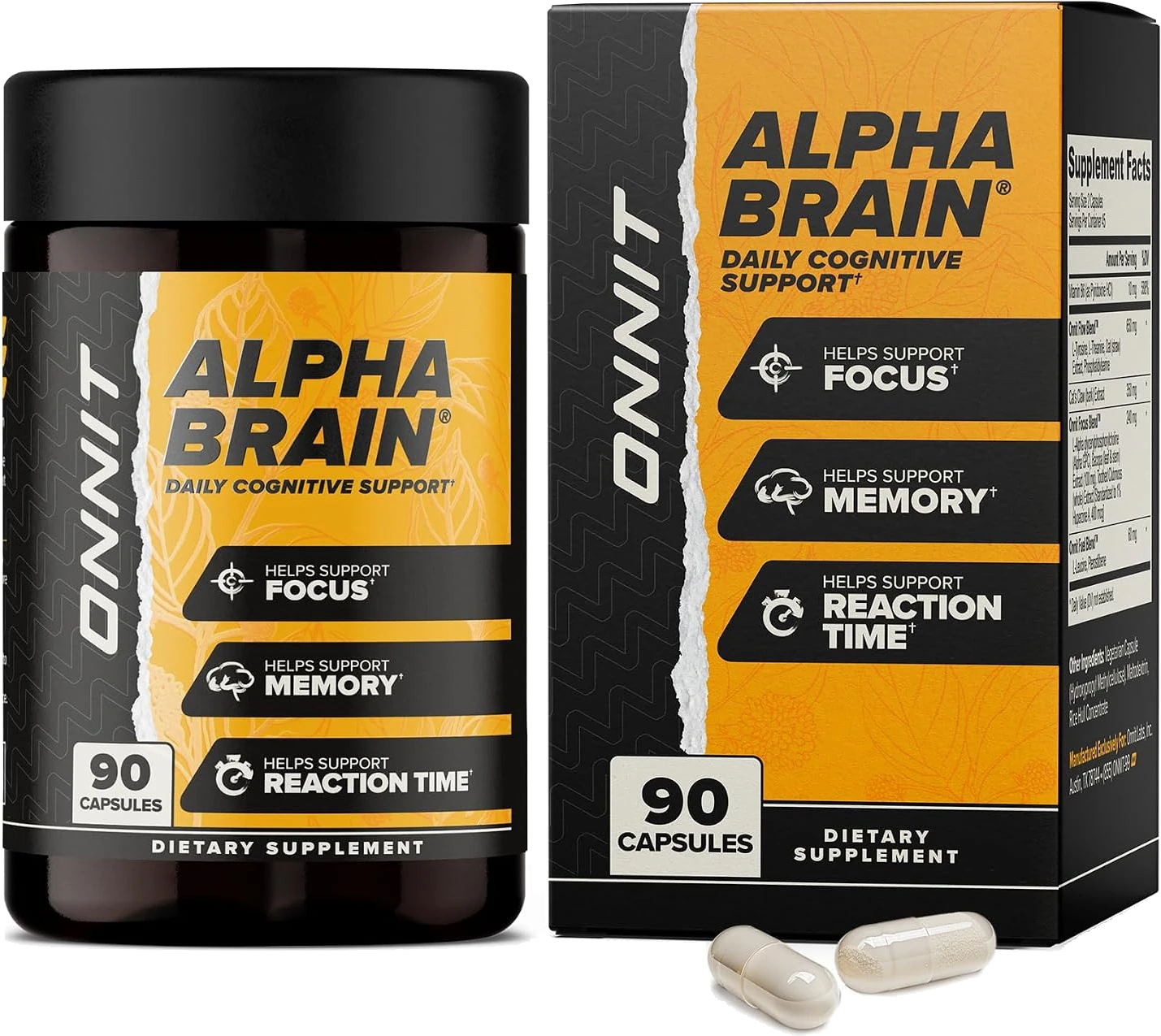

We audited the 90-count panel,1 and the 30- and 60-count bottles show the same contents per serving. Two capsules contain 1,300 mg of main ingredients plus 10 mg of B6. Maltodextrin and rice hull concentrate fill the remaining space inside a hypromellose shell, so the capsules are a normal size.
The Focus Blend prints two of its doses, bacopa at 100 mg and huperzine A at 400 mcg. That's what allows the alpha-GPC amount to be calculated by subtraction. Neither of the other blends prints an individual amount. The panel has no lot number, testing mark or certification seal. Onnit's product page displays an "IGEN Certified Non-GMO" badge, but that covers non-GMO testing rather than potency or purity.2
“is designed to support memory, focus, and mental processing speed”
PartlyThe product page keeps its promises relatively modest. It also says Alpha Brain "promotes alpha brain wave activity and supports acetylcholine levels, helping you tap into flow state".2 Oddly, the page doesn't mention the trial, even though it's the product's strongest asset. Nothing on the label measures a brain wave.
In the trial, 63 adults aged 18 to 35 completed six weeks on Alpha Brain or placebo after a two-week placebo run-in. Compared with placebo, the Alpha Brain group improved on delayed verbal recall and an executive-function task.8
Onnit funded the study, and one author worked for the company. The registration records 73 people enrolled and 63 finishing.9 The authors concluded that "the results merit further study". The trial ran from February 2013 to September 2014 using the product Onnit sold at the time. That version contained 5 mg of vinpocetine, which remained on the 2015 label but is absent today.121337 If the archived labels still reflected the contents, it also used the printed 2013 doses rather than whatever the blends contain now.
A 2018 Army study gave 43 soldiers three capsules a day for one month and found no difference from placebo in marksmanship or reaction time.10 Another Onnit-product trial finished in June 2026. It was a 32-person crossover study of acute effects on vigilance and fatigue, run by the Applied Science and Performance Institute. Its arms were "Alpha Brain", "Alpha Brain 2.0" and placebo, with no results posted yet.30 The name "Alpha Brain 2.0" is the first public sign of a second version, and onnit.com doesn't describe one.
The advertising also prompted a lawsuit. In April 2024, a proposed class action filed in the Southern District of New York alleged that Alpha Brain's marketed benefits relied on a flawed clinical study.31 The plaintiff's claims were dismissed with prejudice by agreement in 2025, while the class claims were dismissed without prejudice. No reasons were given.32 The court decided nothing about the science either way. We include the outcome because older reviews still call the case pending.
“BSCG Certified Drug Free”
Doesn't hold upReviews from recent years, including some updated this year, continue to describe Alpha Brain this way. BSCG's product page now redirects to a notice reading "This brand or product is not currently certified by BSCG."7 You'd expect a lapsed certification to disappear from updated reviews, but it hasn't. That's why we checked the registry. Onnit publishes no lab report, and Alpha Brain doesn't appear in the NSF or USP listings.
“30-day money back guarantee”
PartlyThe guarantee has improved since our previous check, although Onnit's own pages disagree about it. The product page advertises it and links to a help article covering the first-time purchase of any Onnit supplement with "no price limit". You keep the product, and Onnit refunds the product cost only on orders placed through onnit.com.4
Onnit's refund-policy page still says the Keep-It guarantee "applies only to first-time purchases of select products under $40". That page says unopened products can be returned within 30 days at your own postage.5 The help article is newer and is the page linked from the product listing, so we recorded 30 days for a first purchase. If Onnit applies that older rule, the 90-count bottle falls outside it.
Onnit's own review widget shows 3.8 from 13,376 reviews pooled across all three bottle sizes.2 Amazon shows 4.1 from 73,591 ratings on Onnit's listing,6 while Trustpilot has 15,779 reviews of onnit.com at 4.3, covering every Onnit product.33 Seeing Onnit's direct customers rate the product below Amazon buyers is unusual.
What's inside, audited
3 ingredients checked, 1 within range, 1 short, 1 with no studied range.
Within range (huperzine A). Short (bacopa). No studied range (cat's claw).
from toothed clubmoss, 1% huperzine A · Moderate evidence
Doses used in studies that showed a benefit
Alpha Brain has 0.4 mg, inside the 0.4 mg to 0.8 mg used in studies that showed a benefit.41
Study dose benchmark from Xu 1995, 0.2 mg twice a day, 8 weeks41
Huperzine A is the ingredient Alpha Brain gets right by the numbers, though it's the one we'd be most cautious about. The label shows 400 mcg from a toothed clubmoss extract made to 1 percent huperzine A. That matches the 400 mcg a day we use as the benchmark, the amount at which the adult trials start.
Those trials involved people with Alzheimer's. A modern phase II study gave 200 or 400 mcg twice a day to 210 patients. The lower amount showed no change. The higher one improved a cognition score at 11 weeks in a secondary analysis, but the gain was no longer significant at 16 weeks.24 A 2013 analysis of 20 such trials judged the evidence low quality.25 None of them were run in healthy adults. Huperzine A is an acetylcholinesterase inhibitor with a half-life of about 12 hours in healthy volunteers,40 so about a quarter of each morning's dose is still in your body when you take the next one. That's a reasonable choice to make deliberately and an odd one to get by default.
leaf and stem extract, standardization not stated · Strong evidence
Doses used in studies that showed a benefit
Alpha Brain has 100 mg. The study dose we use as this ingredient's benchmark is 250 mg, so it's 150 mg short.39
Study dose benchmark from Raghav 2006, 125 mg twice a day, 12 weeks39
Bacopa provides 100 mg, which is 150 mg less than the 250 mg a day that worked in the smallest study, where older adults with memory complaints took 125 mg twice a day for 12 weeks.39 Alpha Brain uses a leaf and stem extract without saying how strong it is. The clearest memory trials used 300 mg of an extract with around 50 percent bacosides for 12 weeks.2223
Without a bacoside figure, there's no way to work out how much of a studied dose Alpha Brain's 100 mg supplies. Onnit's 2011 label used 500 mg of a 20 percent extract, providing 100 mg of bacosides, and today's label gives no figure to compare with it.
Also on the label is cat's claw 350 mg. We have no verified human dose range on file for cat's claw, so it stays in the formula count, earns nothing for dose and only a small fixed credit for evidence, which lowers the score.
Also on the label is vitamin B6 10 mg. It has no cognitive dose range for people who aren't deficient, so it doesn't count toward the formula score.
Cat's claw is the largest printed amount at 350 mg, but there is less human research behind it than anything else here. The evidence consists of a 2019 cell and mouse study on plaque and tangle chemistry26 and a 2020 rat study.27 Both examined a particular extract, and neither involved people. Onnit has included cat's claw under the AC-11 trademark since the first version, so the ingredient is clearly intentional. Those studies give us no human cognitive dose to compare with 350 mg, so it earns nothing for its dose and only the minimum credit for evidence.
Vitamin B6 comes in at 10 mg, or 588 percent of the daily value, which the label presents as a feature. A 2014 analysis of 11 trials covering 22,000 people found that lowering homocysteine with B vitamins didn't improve cognition in people who weren't deficient.28 A Cochrane review of B6 alone reached the same result.29 This amount isn't a safety concern by itself, but it doesn't give you a reason to buy the bottle.
Seven ingredients have no printed dose. Tyrosine, theanine, oat straw and phosphatidylserine share the 650 mg Flow Blend. Alpha-GPC sits in the 240 mg Focus Blend, while leucine and pterostilbene share the 60 mg Fuel Blend.
Three of those ingredients have human evidence at known amounts. Theanine has an analysis of 31 trials behind it at 200 mg,16 and a four-week daily trial at that amount where only people with the lowest starting scores beat placebo on verbal fluency.17 Phosphatidylserine was studied for 12 weeks and six months at 100 to 300 mg in older adults with memory complaints.1920 Tyrosine studies used 150 mg per kilogram, or around 10 g for a 70 kg adult, in people under acute stress.15 The current label gives you no way to tell how Alpha Brain's amounts compare.
Blend decoded
Onnit's product page listed every dose in January 2013. It showed alpha-GPC 100 mg, Huperzia serrata 40 mg, vinpocetine 5 mg, AC-11 cat's claw 350 mg, phosphatidylserine 50 mg, bacopa 100 mg, pterostilbene 750 mcg, L-tyrosine 300 mg, L-theanine 200 mg, oat straw 100 mg and vitamin B6 10 mg.11 One year later, the same ingredients appeared under three blend names with totals replacing the doses.12 By mid 2015, those totals matched today's bottle except for the Fuel Blend, which lost 5 mg when vinpocetine was removed.13
The arithmetic fits unusually neatly. Tyrosine 300 plus theanine 200 plus oat straw 100 plus phosphatidylserine 50 equals the 650 mg Flow Blend. Alpha-GPC 100 plus bacopa 100 plus Huperzia 40 equals the 240 mg Focus Blend.
In 2014, the Flow Blend was 710 mg and included leucine. That's 60 mg more than today's 650 mg blend. The current Fuel Blend contains 60 mg of leucine and pterostilbene. If pterostilbene stayed at 750 mcg, leucine is about 59 mg. Three blend totals and four label revisions fit one set of doses to within a milligram. The only positive product trial also used that split if the labels held, since recruitment ran from 2013 to 2014.9
| Blend-hidden ingredient | 2013 printed dose | What today's label allows | Status |
|---|---|---|---|
| Alpha-GPC | 100 mg | Exactly 100 mg, the Focus Blend's 240 mg minus 100 mg of bacopa and 40 mg of 1% Huperzia extract (400 mcg huperzine A) | FACT by subtraction |
| L-tyrosine | 300 mg | 162.5 mg to under 650 mg (listed first of four in 650 mg) | BOUNDED, 300 mg INFERRED |
| L-theanine | 200 mg | Up to 325 mg (listed second) | BOUNDED, 200 mg INFERRED |
| Oat straw extract | 100 mg | Up to about 216.7 mg (listed third) | BOUNDED, 100 mg INFERRED |
| Phosphatidylserine | 50 mg | Up to 162.5 mg (listed last) | BOUNDED, 50 mg INFERRED |
| L-leucine | not listed in 2013, about 60 mg by 2014 arithmetic | 30 to 60 mg (listed first of two in 60 mg) | BOUNDED, about 59 mg INFERRED |
| Pterostilbene | 750 mcg | Up to 30 mg (listed second) | BOUNDED, 750 mcg INFERRED |
Label order must run from the largest amount to the smallest, which is where the bounds come from. Sources 11 to 14.
The inferred split doesn't repair the dose gaps. It mostly helps explain why the blends exist. Theanine at 200 mg would become the second ingredient to pass. Phosphatidylserine would provide 50 mg against the 300 mg we use as its benchmark. Alpha-GPC would provide 100 mg against 315 mg, and only one-twelfth of the 1,200 mg a day that helped people with Alzheimer's.21
Oat straw would be 100 mg compared with the 430 mg that worked over four weeks,18 while 300 mg of tyrosine would be about 3 percent of the roughly 10 g used in its studies. Health Canada's 2013 license for a Canadian version of Alpha Brain lists the same ingredients in the same order and confirms alpha-GPC at 100 mg. It confirms nothing else because the other amounts differ and the license is inactive.14
There are two ways this reconstruction could be wrong. Onnit may have changed the split without changing the totals, so every relevant row is marked inferred rather than fact. You may also prefer to rely only on the bounds. Either way, alpha-GPC at 100 mg is established by subtraction from today's label, and the benchmark we use is 315 mg.
Compare it yourself
Alpha Brain against its closest matches
| Product |  Alpha BrainThis review |  Transparent Labs Cognition | 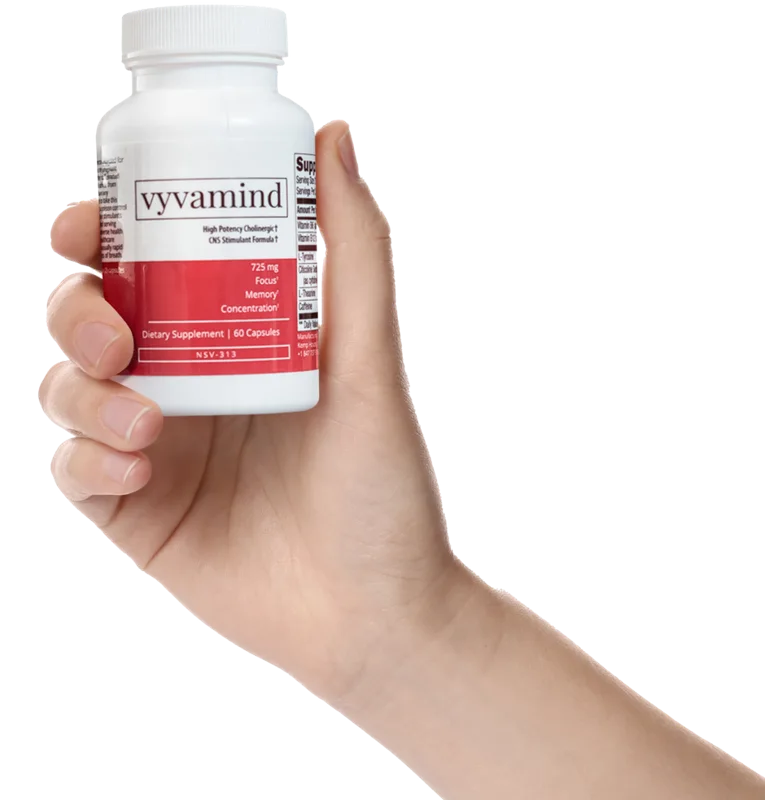 Vyvamind |  Mind Lab Pro |
|---|---|---|---|---|
| Audit rating | 3.7/10 | 7.8/10 | 6.4/10 | 5.5/10 |
| Price per serving | $1.78 | $1.67 | $2.33 | $2.30 |
| Doses of Alpha Brain's ingredients | ||||
| Cat's Claw | 350 mgbark extractNo cognitive dose range | Not in formula | Not in formula | Not in formula |
| Huperzine A | 0.4 mgfrom toothed clubmoss, 1% huperzine AAt or above the study dose benchmark | 0.3 mgHuperzia serrata leaf0.1 mg below the study dose benchmark | Not in formula | Not in formula |
| L-Tyrosine | In a blend, dose not printed | Not in formula | 300 mg1,700 mg below the study dose benchmark | 142 mg175 mg N-acetyl L-tyrosine on the label1,858 mg below the study dose benchmark |
| L-Theanine | In a blend, dose not printed | 100 mgAt or above the study dose benchmark | 150 mgAt or above the study dose benchmark | 100 mgAt or above the study dose benchmark |
| oat-straw | In a blend, dose not printed | Not in formula | Not in formula | Not in formula |
| Phosphatidylserine | In a blend, dose not printed | 140 mgSerinAid (200 mg at 70% phosphatidylserine)160 mg below the study dose benchmark | Not in formula | 100 mgfrom sunflower lecithin200 mg below the study dose benchmark |
| alpha-gpc | In a blend, dose not printed | Not in formula | Not in formula | Not in formula |
| pterostilbene | In a blend, dose not printed | Not in formula | Not in formula | Not in formula |
| l-leucine | In a blend, dose not printed | Not in formula | Not in formula | Not in formula |
| Bacopa Monnieri | 100 mgleaf and stem extract, standardization not stated150 mg below the study dose benchmark | Not in formula | Not in formula | 150 mgfull-spectrum, 24% bacosides100 mg below the study dose benchmark |
The products that share the most cognitive ingredients with Alpha Brain are shown first. Any product sharing at least two can be added.
Alpha Brain shares theanine, phosphatidylserine and alpha-GPC with half the category, but it doesn't show a dose for any of them. That makes a clean comparison difficult. Mind Lab Pro is the obvious caffeine-free alternative at $2.30. It prints theanine at 100 mg, phosphatidylserine at 100 mg and bacopa at 150 mg from a 24 percent extract. It also includes 250 mg of citicoline and lion's mane, which Alpha Brain doesn't, with every amount shown on the panel.
NooCube is another caffeine-free option that prints every amount, at $2.17. It shares bacopa, tyrosine, theanine and cat's claw with Alpha Brain. Its bacopa provides 250 mg from a 20 percent extract, so at least you know what you're comparing.
Transparent Labs Cognition makes more sense if you're interested in the acetylcholine angle behind Alpha Brain's marketing and don't mind caffeine. It prints 250 mg of citicoline and 300 mcg of huperzine A for $1.67. Alpha Brain's strongest narrow case is its trial. If a placebo-controlled trial of an earlier Alpha Brain formula, which contained vinpocetine, matters more to you than knowing the doses, no caffeine-free brain supplement we've audited has a better one. That's still a narrow reason to choose it.
Price and where to buy
Onnit listed all three sizes in stock when we checked. The 90-count cost $79.95, or $1.78 a serving, and the 60 and 30-count bottles cost more a serving.3
Onnit's own Amazon store, sold by ONNIT and shipped by Amazon, carried the same sizes when we checked, with the 30-count cheaper there and Subscribe & Save lower still on the 90-count.6 The 90-count is the only size worth using for a regular price comparison. At $1.78 a serving, Alpha Brain is one of the cheaper caffeine-free brain supplements we've audited. Mind Lab Pro costs $2.30, and Nooceptin $2.23 from its website.
The money-back guarantee applies only to orders from onnit.com. Buy direct if you want that refund route. Amazon is the brand's own store and carries the same product, and it's the better buy only for the cheaper 30-count or Subscribe & Save.
What studied amounts cost separately
Most Alpha Brain doses are hidden, so this comparison can only start from the two scored ingredients that have a studied dose. Our picks show huperzine A and bacopa at the amounts the studies started from, which is what the research used, not what Alpha Brain contains. Bacopa is a clear case, at 250 mg in the list against the 100 mg printed on the label.
Every other ingredient on the label is sold on its own too. If the 2013 split still applies, that means theanine, phosphatidylserine, tyrosine, oat straw and alpha-GPC as well, each available as a single-ingredient supplement.
Bought separately
$0.71 a day ($21.24 for 30 servings)
Alpha Brain at onnit.com
$1.78 a day ($53.30 for 30 servings)
Buying separately saves $1.07 a day ($32.06 for 30 servings). That covers two of its ingredients. The rest are in blends with no amounts to price.
The two in the list cost less a day than Alpha Brain on our picks when we checked. That's two ingredients against the whole bottle, though, so it isn't a like-for-like saving, even with huperzine A priced at Alpha Brain's 400 mcg. Buying separately does let you add theanine and phosphatidylserine at the amounts in their studies, which the list leaves out. You would give up the product trial, though it tested an earlier formula with vinpocetine, not today's bottle. That's the main reason to pay $1.78 instead.
What other reviewers say

Innerbody Research
Written review · Lee Anderson · Updated Jul 16, 2024
“Alpha BRAIN may have the potential to improve verbal memory ... However, proprietary blends obscure most ingredient dosages and make it difficult to truly estimate the chance of side effects from certain riskier nootropic ingredients.”

Fortune Recommends
Written review · Emily Phares, reviewed by Jillian Robillard, MS, RD · Updated Aug 1, 2026
“Our tester's experience was fine overall, but he disliked the lack of ingredient transparency.”

WholisticResearch
Written review · Jacob Kovacs · Sep 24, 2026
“Our thorough review of Alpha Brain reveals mixed sentiments. Alpha Brain delivers subtle cognitive enhancement effects when used consistently, though results vary significantly between individuals. Despite some positive anecdotes online, the consensus leans towards minimal impact.”

ConsumerLab
Written answer · Tod Cooperman, M.D. · Updated Nov 2, 2023
“However, company-sponsored studies of Alpha Brain suggest it may be helpful for improving only limited aspects of memory, and these studies have been conducted only with young adults. In addition, one of the key ingredients (vinpocetine) in the trials of Alpha Brain is no longer in the product.”

SOMA Analytics
Written review · Alex Whybrow · Updated Jul 26, 2024
“Alpha Brain is a decent nootropic. It has some good ingredients and performs to a good level. However, there are better options on the market.”
Five reviewers cover the current product, and their scores sit in the range its label earns. Innerbody gives Alpha Brain an Editor's Rating of 3.75 and calls the blends "a sneaky move". Its review was last updated in July 2024 but still describes the product as BSCG-certified.34 Fortune gives it 3.5 out of 5 after a one-day test. The tester noticed nothing and disliked the hidden doses.35 WholisticResearch rates it 3.7 out of 5 after three people took it for three weeks and described the effects as "subtle".36 ConsumerLab gives no score and catches the detail the others miss. The trials used a version containing vinpocetine, which "is no longer in the product", and ConsumerLab reads the 2016 result as a 12 percent improvement in verbal recall with no gain on its other memory, attention or processing-speed tests.37 The paper's abstract also reports a gain on executive-function tasks, so ConsumerLab's reading is the narrower one.8 SOMA Analytics also gives no score. It calls Alpha Brain "a decent nootropic" but would buy NooCube instead.38 Two of these five reviews still present the BSCG certification as current, while the registry says it isn't.
What buyers report
Safety notes
Alpha Brain contains no caffeine or other stimulant. The time of day matters less here than it does with a caffeinated product. Huperzine A is the ingredient to consider. At 400 mcg a serving, you're taking a cholinesterase inhibitor at an amount used in Alzheimer's trials. Its half-life is about 12 hours, and Alpha Brain is meant to be taken daily.
Some users cycle huperzine A, taking breaks of a few days or weeks, but no trial has tested whether that helps. Don't combine Alpha Brain with another huperzine product, such as Transparent Labs Cognition. You should also avoid combining it with cholinergic medication. If you take anything for memory, mood or your heart, ask the prescriber first. Cat's claw is traditionally avoided in pregnancy and by people with autoimmune conditions or on immunosuppressants, and the tyrosine in the Flow Blend can interact with levodopa, MAO inhibitor antidepressants and thyroid medication.
Onnit tells you to start with one capsule and build up, while taking no more than two in 24 hours.2 That's tighter than the four capsules a day allowed by the 2013 label. Bacopa provides 100 mg. The trials that reported stomach upset used 300 mg of a standardized extract, and Alpha Brain doesn't state its bacopa's strength. Vitamin B6 is 10 mg, well below the roughly 100 mg a day associated with nerve problems after long use. Remember to count it if you also take a B complex. Onnit advises anyone pregnant or breastfeeding to consult a doctor, and so do we. We're researchers, not doctors.
Final thoughts
Alpha Brain is a 2013 brain supplement with a trial showing an earlier version helped on two measures, yet its current label hides most amounts. Of the printed ingredients we can compare, only huperzine A reaches the studied amount. Onnit's old labels suggest 200 mg of theanine passes, while 50 mg of phosphatidylserine, 100 mg of alpha-GPC and 300 mg of tyrosine come in below the research. Its certification lapsed, though the category price is fair and first-time direct buyers now get a real guarantee.
If you want to see every dose, Mind Lab Pro costs a little more a day. Its ingredients with human evidence can also be bought separately at the amounts in the studies, and we'd choose either option over a 650 mg blend split four ways. If the trial is what you want, buy the 90-count from onnit.com and take two capsules in the morning.
FAQ
Does Alpha Brain contain caffeine?
Is Alpha Brain clinically proven?
What are the doses inside the Onnit Flow Blend?
Is Alpha Brain BSCG certified?
Does Alpha Brain have a money-back guarantee?
How many capsules do you take?
Alpha Brain or Mind Lab Pro?
Is Alpha Brain safe?
Sources
41 sources cited
- Alpha Brain official supplement facts panel, 90 count (2 capsules per serving, 45 servings), onnit.com, accessed Oct 19, 2026. onnit.com label image
- Alpha Brain 90-count product page, onnit.com. "designed to support memory, focus, and mental processing speed", "promotes alpha brain wave activity and supports acetylcholine levels", caffeine-free, gluten-free and IGEN non-GMO badges, directions (start with one capsule, no more than two in 24 hours), "30-day money back guarantee" link, the Yotpo widget (3.8 from 13,376). Accessed Oct 19, 2026. onnit.com
- Onnit store product data. Alpha Brain 90 ct $79.95, 60 ct $57.95, 30 ct $34.95, all available. Read Oct 19, 2026. onnit.com product data
- Onnit help center, "30 Day Money Back Guarantee". First-time purchase of any Onnit supplement, "no price limit", keep the product, one refund per product per customer, onnit.com orders only, product cost refunded. Accessed Oct 19, 2026. help.onnit.com
- Onnit refund policy. Keep-It guarantee "applies only to first-time purchases of select products under $40", unopened products returnable within 30 days at the customer's postage. Accessed Oct 19, 2026. onnit.com/policies/refund-policy
- Amazon listing B07WP7Q5BF, sold by ONNIT and shipped by Amazon. 90, 60 and 30 ct listed, Subscribe & Save offered, 4.1 from 73,591 ratings. Checked with delivery location New York 10001, Oct 19, 2026. amazon.com
- BSCG, Banned Substances Control Group. The Alpha Brain page redirects to a notice reading "This brand or product is not currently certified by BSCG." Checked Oct 19, 2026. bscg.org
- Solomon TM, et al. A randomized, double-blind, placebo controlled, parallel group, efficacy study of alpha BRAIN administered orally. Hum Psychopharmacol, 2016. 63 adults aged 18 to 35, six weeks, one author at Onnit Labs. PMID 26876224
- ClinicalTrials.gov NCT02739139, Efficacy Study of AlphaBRAIN Administered Orally. 73 enrolled, completed September 2014, no results posted. Accessed Oct 19, 2026. NCT02739139
- Barringer N, et al. Impact of a purported nootropic supplementation on measures of mood, stress, and marksmanship performance in U.S. active duty soldiers. J Int Soc Sports Nutr, 2018. 43 soldiers, three capsules a day for a month, no difference from placebo. PMID 29855372
- Onnit Alpha Brain product page as archived Jan 20, 2013, with the supplement facts image listing every dose (alpha GPC 100 mg, Huperzia serrata 40 mg, vinpocetine 5 mg, AC-11 350 mg, phosphatidylserine 50 mg, bacopa 100 mg, pterostilbene 750 mcg, L-tyrosine 300 mg, L-theanine 200 mg, oat straw 100 mg, vitamin B6 10 mg). Wayback Machine, accessed Oct 19, 2026. web.archive.org, 2013
- Onnit Alpha Brain product page as archived Feb 9, 2014. First blend label (Focus Blend 240 mg, Flow Blend 710 mg with L-leucine, Fuel Blend 356 mg with AC-11 and vinpocetine). Wayback Machine, accessed Oct 19, 2026. web.archive.org, 2014
- Onnit Alpha Brain product page as archived Feb 24, 2016, with the July 2015 label image. Flow Blend 650 mg, cat's claw 350 mg, Focus Blend 240 mg, Fuel Blend 65 mg with vinpocetine. Wayback Machine, accessed Oct 19, 2026. web.archive.org, 2016
- Health Canada Licensed Natural Health Products Database, NPN 80041968, Alpha Brain, Onnit Labs, LLC, licensed Apr 26, 2013, status inactive. Per-capsule medicinal ingredients including L-tyrosine 125 mg, L-theanine 50 mg, Avena sativa 25 mg, phosphatidylserine-enriched lecithin 17.85 mg, alpha-GPC 50 mg. Accessed Oct 19, 2026. health-products.canada.ca
- Thomas JR, et al. Tyrosine improves working memory in a multitasking environment. Pharmacol Biochem Behav, 1999. 150 mg per kg, single dose, 20 adults. PMID 10548261
- Gerolymos C, et al. Cognitive and affective effects of L-theanine. A systematic review and meta-analysis of 31 randomized trials. Mol Psychiatry, 2026. PMID 42410082
- Hidese S, et al. Effects of L-theanine administration on stress-related symptoms and cognitive functions in healthy adults. A randomized controlled trial. Nutrients, 2019. 200 mg a day for 4 weeks, 30 adults. PMID 31623400
- Kennedy DO, et al. Acute and chronic effects of green oat (Avena sativa) extract on cognitive function and mood during a laboratory stressor in healthy adults. Nutrients, 2020. 430, 860 or 1,290 mg a day for 29 days, 132 adults aged 35 to 65. PMID 32485993
- Crook TH, et al. Effects of phosphatidylserine in age-associated memory impairment. Neurology, 1991. 300 mg a day for 12 weeks, 149 adults aged 50 to 75. PMID 2027477
- Kato-Kataoka A, et al. Soybean-derived phosphatidylserine improves memory function of the elderly Japanese subjects with memory complaints. J Clin Biochem Nutr, 2010. 100 or 300 mg a day for 6 months, 78 adults aged 50 to 69. PMID 21103034
- De Jesus Moreno Moreno M. Cognitive improvement in mild to moderate Alzheimer's dementia after treatment with the acetylcholine precursor choline alfoscerate. Clin Ther, 2003. 400 mg three times a day for 180 days, 261 patients. PMID 12637119
- Stough C, et al. The chronic effects of an extract of Bacopa monniera (Brahmi) on cognitive function in healthy human subjects. Psychopharmacology, 2001. 300 mg of a standardized extract for 12 weeks. PMID 11498727
- Kongkeaw C, et al. Meta-analysis of randomized controlled trials on cognitive effects of Bacopa monnieri extract. J Ethnopharmacol, 2014. Nine trials of standardized extracts, at least 12 weeks. PMID 24252493
- Rafii MS, et al. A phase II trial of huperzine A in mild to moderate Alzheimer disease. Neurology, 2011. 200 or 400 mcg twice daily for 16 weeks, 210 patients. PMID 21502597
- Yang G, et al. Huperzine A for Alzheimer's disease. A systematic review and meta-analysis of randomized clinical trials. PLoS One, 2013. 20 trials, rated low quality. PMID 24086396
- Snow AD, et al. The Amazon rain forest plant Uncaria tomentosa (cat's claw) and its specific proanthocyanidin constituents are potent inhibitors and reducers of both brain plaques and tangles. Sci Rep, 2019. Cell and mouse study. PMID 30728442
- Castilhos LG, et al. Uncaria tomentosa improves cognition, memory and learning in middle-aged rats. Exp Gerontol, 2020. PMID 32628974
- Clarke R, et al. Effects of homocysteine lowering with B vitamins on cognitive aging. Meta-analysis of 11 trials with cognitive data on 22,000 individuals. Am J Clin Nutr, 2014. PMID 24965307
- Malouf R, Grimley Evans J. The effect of vitamin B6 on cognition. Cochrane Database Syst Rev, 2003. PMID 14584010
- ClinicalTrials.gov NCT07495592, The Acute Effects of Onnit Alpha Brain on Cognition and Mood States. Randomized double-blind crossover, 32 adults, arms "Alpha Brain", "Alpha Brain 2.0" and placebo, sponsor Applied Science & Performance Institute, started May 1, 2026, completed June 26, 2026, no results posted. Accessed Oct 19, 2026. NCT07495592
- Bloomberg Law. Joe Rogan-endorsed brain supplement faces false-ad class action. Apr 25, 2024. Proposed class action, S.D.N.Y., No. 7:24-cv-03098, alleging the marketed benefits rest on a flawed clinical study. news.bloomberglaw.com
- Davis Wright Tremaine, Stay ADvised brand protection newsletter, Jul 8, 2025. The parties stipulated to dismiss the plaintiff's claims with prejudice and the class claims without prejudice, no reasons given. dwt.com
- Trustpilot reviews of onnit.com. 4.3 from 15,779 reviews, brand-level, claimed profile. Checked Oct 19, 2026. trustpilot.com
- Anderson L. Alpha BRAIN review. Innerbody Research, last updated Jul 16, 2024. Editor's Rating 3.75 (no denominator printed, criteria out of 10). States "Alpha BRAIN is BSCG-certified". Accessed Oct 19, 2026. innerbody.com
- Phares E. Alpha Brain review. Fortune Recommends, published Apr 10, 2026, updated Aug 1, 2026, medically reviewed by Jillian Robillard, MS, RD, LDN, CSSD. Fortune score 3.5 out of 5, "Not third-party tested". Accessed Oct 19, 2026. fortune.com
- Kovacs J. Alpha Brain review. WholisticResearch, published Sep 24, 2026. Overall rating 3.7 out of 5. Accessed Oct 19, 2026. wholisticresearch.com
- Cooperman T. Does Alpha Brain work for memory and focus? ConsumerLab, latest update Nov 2, 2023. No score, notes that vinpocetine was in the trial formula and is no longer in the product, and that the product was "tested in 2022 and certified drug-free by the Banned Substances Control Group". Accessed Oct 19, 2026. consumerlab.com
- Whybrow A. Alpha Brain review. SOMA Analytics, last updated Jul 26, 2024. No score. Accessed Oct 19, 2026. soma-analytics.com
- Raghav S, et al. Randomized controlled trial of standardized Bacopa monniera extract in age-associated memory impairment. Indian J Psychiatry, 2006. 125 mg twice a day for 12 weeks, improved mental control, logical memory and paired-associate learning. PMID 20703343
- Li YX, et al. Pharmacokinetics of huperzine A following oral administration to human volunteers. Eur J Drug Metab Pharmacokinet, 2007. One 0.4 mg dose in 12 healthy adults, elimination half-life 716 minutes, about 12 hours. PMID 18348466
- Xu SS, et al. Efficacy of tablet huperzine-A on memory, cognition, and behavior in Alzheimer's disease. Zhongguo Yao Li Xue Bao, 1995. 0.2 mg twice a day for 8 weeks, 103 patients. PMID 8701750
Where this data comes from
- Product image
- Official Onnit product render, used for review
- Third-party testing
- Not currently certified in the BSCG registry. No certificate of analysis published. Not NSF or USP
Our scoring method, weights, and the rules that keep affiliate money away from scores are documented on the editorial process page.
Top Rated Nootropics is an independent research and review platform. We are passionate supplement researchers, not medical professionals. Always consult a qualified healthcare provider before starting any supplement regimen. These statements have not been evaluated by the Food and Drug Administration. These products are not intended to diagnose, treat, cure, or prevent any disease.