Transparent Labs Cognition Review 2026
 James BevanUpdated October 19, 2026
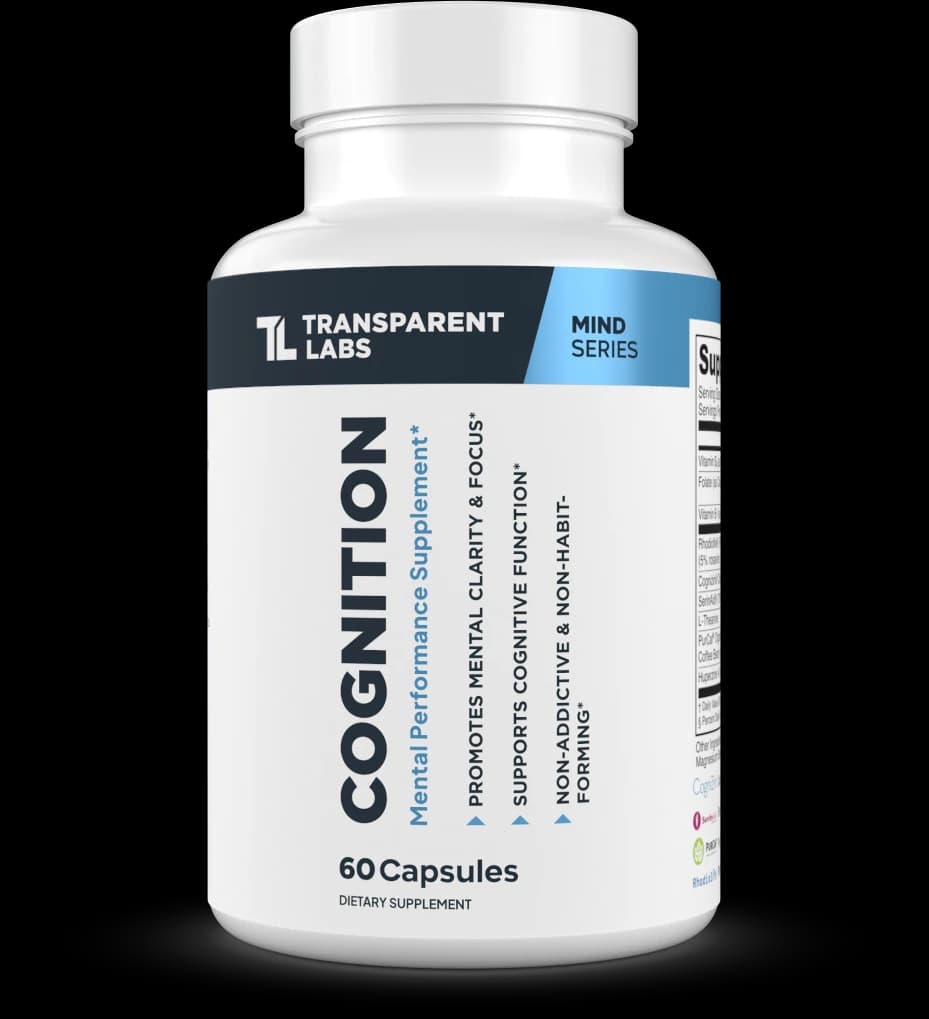
Transparent Labs Cognition prints every amount on the label and links a lab report anyone can read online, though the report checks for contaminants rather than measuring the ingredients. But does a tidy label mean the amounts are big enough, and is it worth $1.67 a day? To find out, we've researched all 9 ingredients against the published studies and weighed up what expert reviewers and 66 buyers report.
Quick verdict
- Price per serving
- $1.67
- Doses in range
- 4 of 6
- Caffeine
- 100 mg
- Money-back guarantee
- 45 days
- Third-party testing
- Partly, contaminants only
- Servings per bottle
- 30
60 cents a day less than our picks at the studied doses, see the list
We may earn a commission from links on this page, at no extra cost to you. How we make money
In this review
What's good, and what isn't
Pros
- Four of six actives reach the dose we use as the benchmark, with named forms (Cognizin citicoline, and a 5% rosavin rhodiola extract that is stronger than the one tested)
- A public, lot-specific lab certificate for microbes and heavy metals, which almost none of the stacks we've audited offer
- 45-day guarantee that covers opened bottles, and $1.67 a serving
Cons
- Phosphatidylserine is 140 mg against a 300 mg benchmark and huperzine A 300 mcg against 400 mcg, while citicoline (250 mg) and theanine (100 mg) sit exactly on theirs
- The certificate is from January 2025 and doesn't measure the amounts of the actives
- 100 mg of caffeine a serving, and huperzine A's evidence comes from Alzheimer's trials, not healthy adults
What our audit uncovered
We checked Cognition's label, lab report and store terms, and these are the findings that matter most if you're buying.
The public lab report checks contaminants, not ingredients
The report for lot 24122316 covers microbes and four heavy metals, with the metals inside their limits and the microbes reported against limits only where the report set one, but it measures none of the main ingredients and dates from January 2025.4
The phosphatidylserine is 140 mg, not 200
The label's 200 mg of SerinAid is a 70 percent ingredient, so a serving supplies 140 mg of phosphatidylserine.1
Every dose and branded form is printed
All six actives are on the panel with their forms, including the caffeine source and the huperzine A amount.1
The guarantee covers opened bottles
You have 45 days from delivery for a refund or store credit, opened bottles included, though you pay the return postage.5
Sold only through its own store
We found no Amazon listing for Cognition when we searched with a US delivery address.7
Why Cognition scored 7.8 out of 10
- Dose fit40%87
Four of six actives reach the dose we use as the benchmark and earn full credit, citicoline and theanine with nothing to spare. Phosphatidylserine, at 140 mg of a 300 mg benchmark, and huperzine A, at 300 of 400 mcg, earn part credit.
- Evidence30%61
Evidence only counts in full when the dose matches the studies. Caffeine is strong, citicoline preliminary and the other four moderate on file, and phosphatidylserine and huperzine A earn part of their points because their doses fall short.
- Transparency20%90
Every dose and form is printed, including the caffeine source and the huperzine A amount. The label leaves you to work out that 200 mg of SerinAid at 70 percent is 140 mg of phosphatidylserine, which costs it a little here.
- Testing10%70
The product page claims "we provide full access to our third-party test results" and publishes a lab report for lot 24122316. It covers microbes and heavy metals, not the amounts of the main ingredients, and it's from January 2025. Those two gaps are the difference between 70 and 100.
Worked out under method audit-v2.0. How the rating is built
Score history
Oct 21, 2026 Rating lowered (8.7 to 7.8)
We raised the benchmarks for phosphatidylserine to 300 mg and huperzine A to 400 mcg after re-reading their trials, so Cognition's 140 mg and 300 mcg now fall short.
Oct 21, 2026 Corrections after a check against the sources
We fixed several statements, including that the rhodiola is a stronger extract than the one tested, and the theanine card now cites a 2023 trial of 100 mg.
Oct 21, 2026 Testing fact corrected
The quick verdict showed testing as Yes, but the public certificate is 21 months old and doesn't measure potency, so it now reads Partly to match the review.
Oct 20, 2026 Rating lowered (8.8 to 8.7)
We graded the research behind citicoline down to preliminary after reviewing its trials, which cut the evidence points it earns.
Oct 19, 2026 First audit published (8.8)
We checked the label, compared each dose with the human research and published the review.
Cognition's 7.8 comes mostly from its ingredient score. Most products give up a lot of points because the amounts are too small, and this one gives up few. Four of its six ingredients reach the dose we use as the benchmark. Phosphatidylserine falls well short, at 140 mg against 300 mg, and huperzine A comes in at 300 mcg against 400 mcg. Two of the four sit right on their mark. The clearest trials used 500 mg of citicoline and 200 mg of theanine, so expecting more from 250 mg and 100 mg would be reasonable.
The other lost points come from evidence, the label and testing. Citicoline's evidence is graded preliminary, because the trials behind it are thinner than they first look, and the two short ingredients earn only part of their evidence points. The label gives phosphatidylserine as 200 mg of a 70 percent ingredient, which leaves you to work out the real amount. The public lab report is tied to a lot number, which few brain supplements offer, but it covers only microbes and heavy metals on a January 2025 batch. A newer report with a potency assay would give testing full marks.
The claims, checked
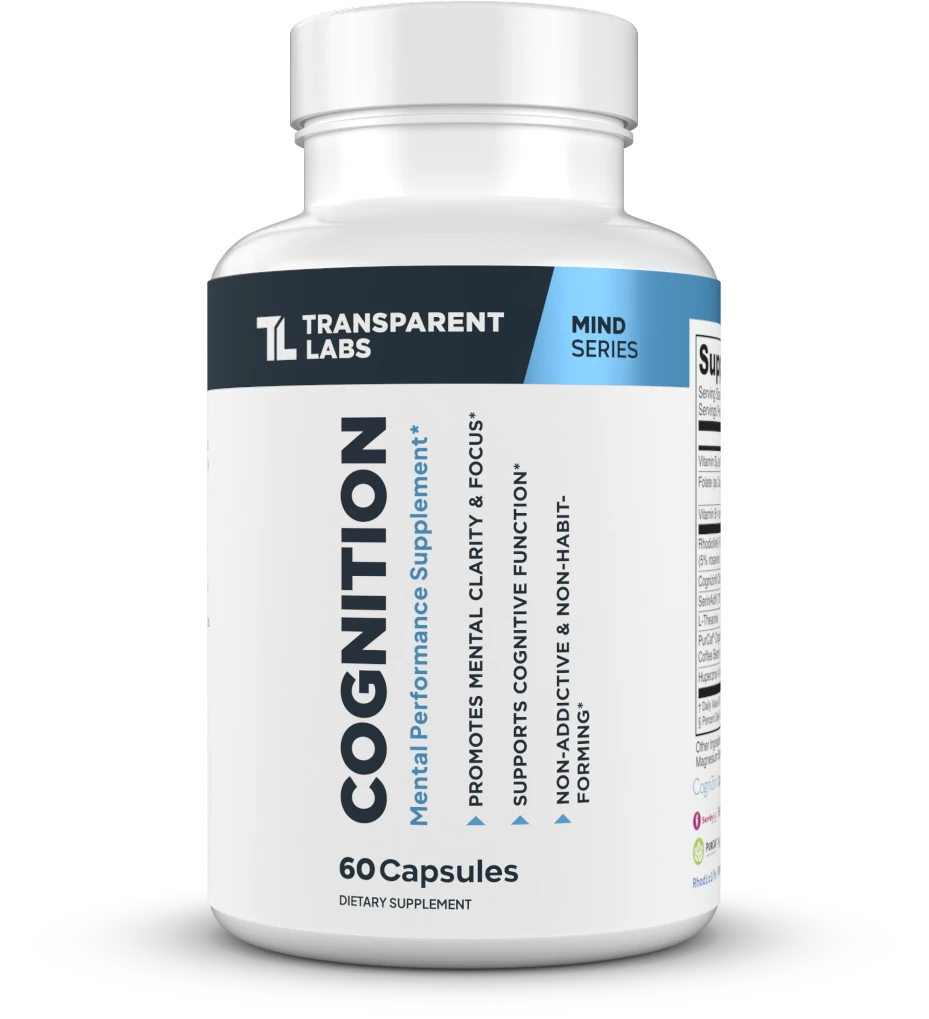

We checked the official facts panel, and it matches the product page's ingredient cards, apart from two small differences. The page adds that the rhodiola contains 1.8 percent salidroside, which isn't printed on the label. Its headline also mentions "four key ingredients", leaving the theanine and huperzine A in the small print.2 We used the panel for every amount on this page.1
The capsule is hypromellose and also contains vegetable magnesium stearate, silicon dioxide and calcium silicate. The six main ingredients add up to about 1,250 mg across two capsules. Two reviewers who took Cognition called the capsules large.2728 The label itself has no lot number or testing mark, and the lab report lives on the product page instead.
“patented and proven ingredients tested in human clinical trials”
PartlyThe product page describes the formula this way.2 The branded ingredients and trials are real, but the research covers the individual ingredients rather than Cognition. A PubMed search for the product returns nothing.8 Its support comes from the ingredient research below, with most amounts reaching our benchmarks rather than the doses behind the clearest results.
“Clinically-validated dosages”
PartlyThis is the other main claim on the page.2 Four of the six ingredients reach the dose we use as the benchmark, two of them with nothing to spare. Phosphatidylserine and huperzine A fall short. We couldn't verify the statement that SerinAid "is the purest and most potent phosphatidylserine ingredient on the market". That's a supplier's slogan, not a measurement.
“we provide full access to our third-party test results”
PartlyThe product page says this and links a lab report for Cognition.2 Advanced Laboratories received the sample for lot 24122316 and completed its report in the same week of January 2025. It covers microbial counts, which met their limits where the report set one and were simply reported where it didn't, and four heavy metals measured by ICP-MS. Lead came to 0.103 micrograms a serving against a 0.5 limit.4 The report doesn't measure the main ingredients. It shows that the batch was clean, not that it contained 250 mg of citicoline, and it's 21 months old.
You'd think a brand named for transparency would post a newer report, and perhaps it will. We also checked the NSF and USP registries in case Cognition held a certification that wasn't mentioned on the page. It doesn't. NSF's two listings cover the company's Hydrate, Creatine HMB and whey protein products, but not Cognition,2324 while USP lists nothing for the brand.25
The product-page widget shows 4.86 stars from 66 reviews collected by the brand.2 Trustpilot has 569 reviews of transparentlabs.com with a 4.6 average, but those cover the full product range. None of the reviews we read mentioned Cognition.26 There is no Amazon listing to provide an independent figure, which is the drawback of keeping this product in the company's own store.
What's inside, audited
6 ingredients checked, 4 within range, 2 short.
Within range (rhodiola, citicoline, L-theanine, caffeine). Short (phosphatidylserine, huperzine A).
Rhodiolife, 5% rosavins, 1.8% salidroside · Moderate evidence
Doses used in studies that showed a benefit
Transparent Labs Cognition has 600 mg, inside the 170 mg to 680 mg used in studies that showed a benefit.10
Study dose benchmark from Darbinyan 2000, 170 mg a day, 2 weeks10
Rhodiola is the biggest amount on the label and has the most room to spare. The 600 mg is a root extract made to contain 5 percent rosavins. That works out to 30 mg of rosavins a serving, compared with 18 mg from the same amount of the 3 percent extract used in the trials. Our benchmark is 170 mg a day, from a two-week trial in 56 physicians on night duty that improved fatigue scores.10 A 20-day study of 100 mg in 40 students during exams reported less mental fatigue, but its own authors called that dose probably too low.9 The highest dose among these trials is 576 mg a day for four weeks in 60 adults with stress-related fatigue, where it improved fatigue scores and attention.11 Cognition sits at the top of that range with a stronger extract, so this is a full dose if you respond to rhodiola.
Cognizin · Preliminary evidence
Doses used in studies that showed a benefit
Transparent Labs Cognition has 250 mg, inside the 250 mg to 500 mg used in studies that showed a benefit.12
Study dose benchmark from McGlade 2012, 250 or 500 mg a day, 28 days12
Citicoline reaches its benchmark and stops there. Cognition provides 250 mg of Cognizin, the form used in the trials. That amount showed a benefit in a four-week trial involving 60 women aged 40 to 60.12 The better-known trial in teenage boys pooled its 250 mg and 500 mg groups,13 while the clearest adult result came from 500 mg a day for 12 weeks in 100 adults over 50 with memory complaints, though that trial missed its main memory measure and its gain came on a secondary test.14 We count 250 mg as enough, but twice as much has firmer support. Mind Lab Pro and Hunter Focus use the same amount. Vyvamind and Nooceptin supply about 59 mg less, once the sodium in their citicoline salt is taken out.
SerinAid (200 mg at 70% phosphatidylserine) · Moderate evidence
Doses used in studies that showed a benefit
Transparent Labs Cognition has 140 mg. The study dose we use as this ingredient's benchmark is 300 mg, so it's 160 mg short.15
Study dose benchmark from Crook 1991, 100 mg three times a day, 12 weeks15
Phosphatidylserine takes a little arithmetic. The label says "SerinAid (70% Phosphatidylserine) 200 mg". That means the serving contains 140 mg of the ingredient measured in the studies, rather than 200 mg, and that's less than half of the 300 mg we use as the benchmark. It comes from the oldest trial, which gave 300 mg a day for 12 weeks to 149 adults with age-associated memory impairment.15 A six-month trial involving 78 older Japanese adults with memory complaints used 100 mg or 300 mg of soy-based phosphatidylserine. Scores rose in every group, placebo included, and only people who started low improved against their own starting point while the placebo group stayed level.16 That's why 100 mg no longer counts as a studied dose for us. Both trials involved older adults with memory problems, which is useful context if you're 30 and sharp.
Moderate evidence
Doses used in studies that showed a benefit
Transparent Labs Cognition has 100 mg, inside the 100 mg to 400 mg used in studies that showed a benefit.30
Study dose benchmark from Dassanayake 2023, One dose of 100, 200 or 400 mg30
Theanine comes together with caffeine at 100 mg each, while trials of theanine alone mostly used 200 mg. A 2026 analysis of 31 randomized trials found that dose improved choice reaction time,17 and in a four-week trial of 30 adults on 200 mg daily, verbal fluency scores rose, but only in the people who started lowest did they beat placebo.18 The 100 mg mark comes from a 2023 trial of theanine alone, where a single 100 mg or 200 mg dose made simple reaction time about 16 milliseconds faster in 32 young adults, with no change in sustained attention.30 In a separate combination trial, 97 mg of theanine with 40 mg of caffeine improved task-switching accuracy and alertness in 44 young adults, measured 20 and 70 minutes after the dose.19 Cognition's 100 mg of each is close to that pairing, though no trial has tested its exact amounts.
PurCaf organic caffeine from green coffee bean · Strong evidence
Doses used in studies that showed a benefit
Transparent Labs Cognition has 100 mg, inside the 40 mg to 300 mg used in studies that showed a benefit.31
Study dose benchmark from McLellan 2016, about 40 to 300 mg a dose, across the trials it reviews20
Caffeine comes from green coffee bean, and the 100 mg lands inside the 40 to 300 mg window where research reviews find reliable gains in attention and vigilance.20
Huperzia serrata leaf · Moderate evidence
Doses used in studies that showed a benefit
Transparent Labs Cognition has 0.3 mg. The study dose we use as this ingredient's benchmark is 0.4 mg, so it's 0.1 mg short.32
Study dose benchmark from Xu 1995, 0.2 mg twice a day, 8 weeks32
Huperzine A deserves the most caution. Its 300 mcg is below the 400 mcg a day we use as the benchmark, and that benchmark comes from Alzheimer's trials. One modern phase II study gave 200 mcg or 400 mcg twice a day to 210 patients. The lower dose showed no change. The higher dose improved one cognition scale at 11 weeks in a secondary analysis, but the gain was no longer significant at 16 weeks.21 A 2013 analysis of 20 similar trials rated them small and low in quality.22 We found no trial of huperzine A in healthy adults, at any dose. It blocks acetylcholinesterase and stays active for much of the day. The shortfall costs Cognition points, but given how little is known about daily use in healthy people, a bigger amount isn't what we'd ask for.
Also on the label are vitamin B6 1.3 mg, folate 400 mcg, vitamin B12 2.4 mcg. These have no cognitive dose range for people who aren't deficient, so they don't count toward the formula score.
Three B vitamins finish the label at or near their daily values, all in active forms, with B6 at 1.3 mg, folate at 400 mcg DFE and B12 at 2.4 mcg. They don't count toward the score, because the research hasn't shown them improving memory or focus in people who aren't low in them. They don't hurt either.
Compare it yourself
Cognition against its closest matches
| Product | Transparent Labs CognitionThis review |  Mind Lab Pro | 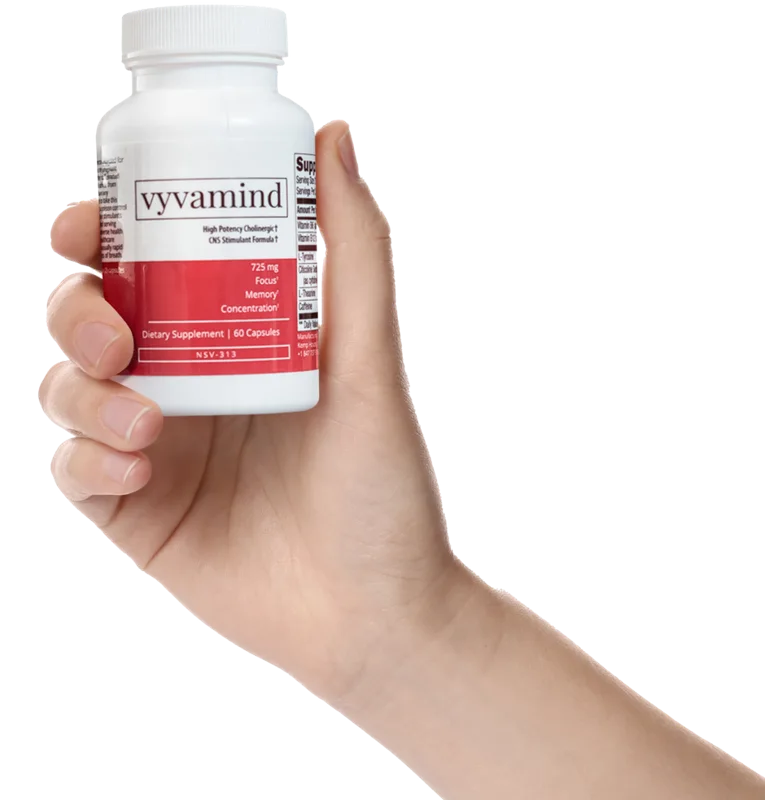 Vyvamind | 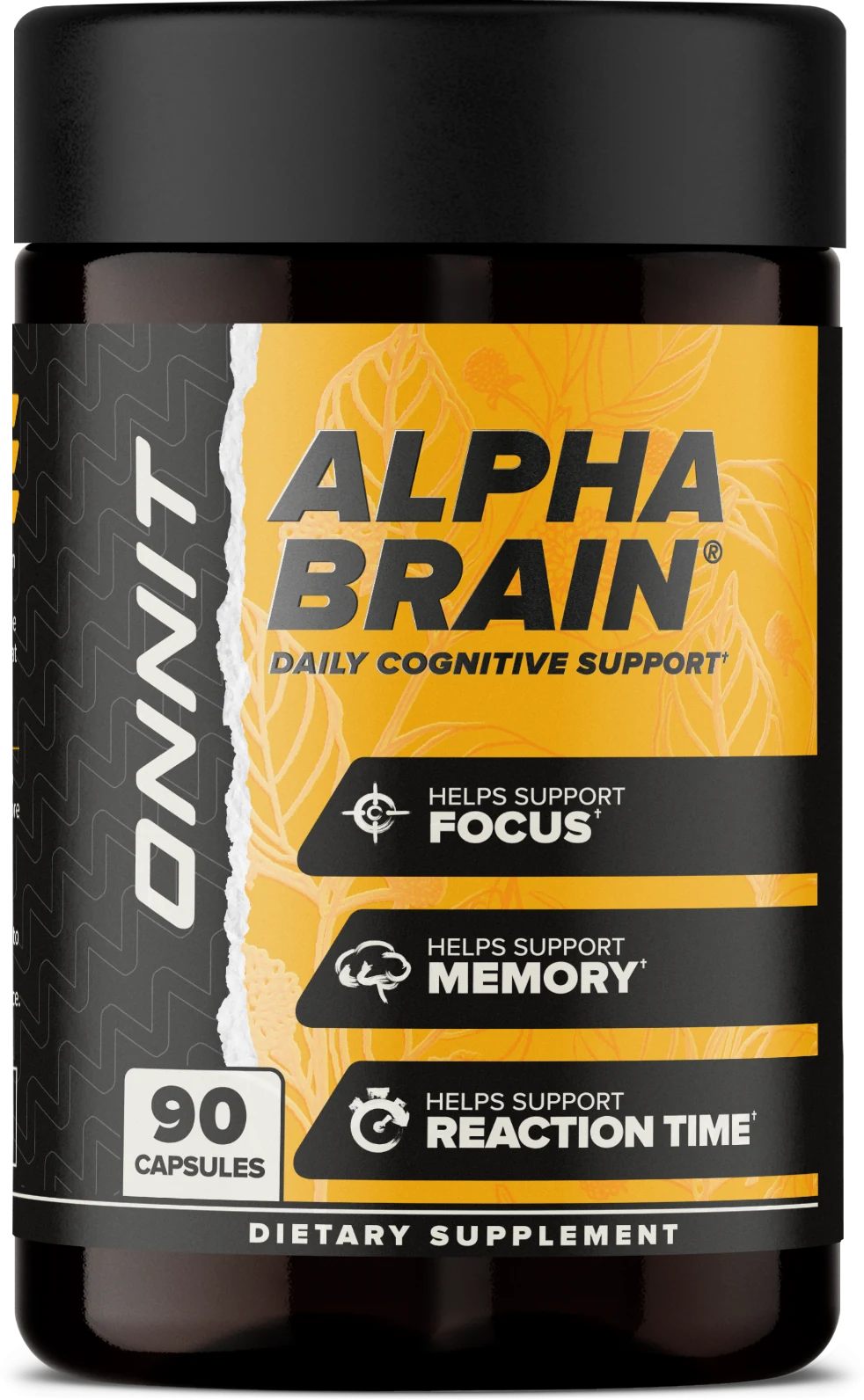 Alpha Brain |
|---|---|---|---|---|
| Audit rating | 7.8/10 | 5.5/10 | 6.4/10 | 3.7/10 |
| Price per serving | $1.67 | $2.30 | $2.33 | $1.78 |
| Doses of Transparent Labs Cognition's ingredients | ||||
| Rhodiola Rosea | 600 mgRhodiolife, 5% rosavins, 1.8% salidrosideAt or above the study dose benchmark | 50 mg3% rosavins, 1% salidrosides120 mg below the study dose benchmark | Not in formula | Not in formula |
| Citicoline | 250 mgCognizinAt or above the study dose benchmark | 250 mgCognizin (per website, not on label)At or above the study dose benchmark | 191 mg200 mg citicoline sodium on the label59 mg below the study dose benchmark | Not in formula |
| L-Theanine | 100 mgAt or above the study dose benchmark | 100 mgAt or above the study dose benchmark | 150 mgAt or above the study dose benchmark | In a blend, dose not printed |
| Caffeine | 100 mgPurCaf organic caffeine from green coffee beanAt or above the study dose benchmark | Not in formula | 75 mganhydrousAt or above the study dose benchmark | Not in formula |
| Phosphatidylserine | 140 mgSerinAid (200 mg at 70% phosphatidylserine)160 mg below the study dose benchmark | 100 mgfrom sunflower lecithin200 mg below the study dose benchmark | Not in formula | In a blend, dose not printed |
| Huperzine A | 0.3 mgHuperzia serrata leaf0.1 mg below the study dose benchmark | Not in formula | Not in formula | 0.4 mgfrom toothed clubmoss, 1% huperzine AAt or above the study dose benchmark |
The products that share the most cognitive ingredients with Transparent Labs Cognition are shown first. Any product sharing at least two can be added.
Vyvamind is another caffeinated option. It uses the same caffeine and theanine pairing, with 200 mg of citicoline sodium, which supplies about 191 mg of citicoline, against Cognition's 250 mg. It lists at $2.33 a serving on its own site and has no testing report anyone can see. Cognition costs less and adds rhodiola, phosphatidylserine and huperzine A to that core, so the extra 67 cents a day runs the other way. Hunter Focus also shares the trio and raises theanine to 200 mg. It surrounds them with 17 other ingredients, doesn't state how strong any of its plant extracts are and costs $3.00.
Mind Lab Pro has the most overlap if you don't want caffeine. It uses the same 250 mg of citicoline, 100 mg of phosphatidylserine against Cognition's 140 mg, the same 100 mg of theanine and 50 mg of rhodiola against Cognition's 600 mg. It costs $2.30 a serving. Nooceptin is the cheaper caffeine-free choice from its website, and cheaper again from its Amazon store when we checked. It has 200 mg of theanine and 150 mg of rhodiola, but about 59 mg less citicoline, once the sodium in its salt is counted.
Cognition has a narrower case than its marketing suggests. Pick it if you want caffeine and rhodiola in the same capsule and would rather have six ingredients, most at their benchmark doses, than twenty with no information on how strong the plant extracts are.
Price and where to buy
Transparentlabs.com listed one size when we checked. The 60-capsule bottle cost $49.99, was in stock and showed 180 units in the store's own inventory count.23 With 30 servings, that's $1.67 a serving. A subscription takes 10 percent off and can ship every 15 to 60 days.
The store's shipping offer reads "Free USA Shipping Over $99",6 so one bottle costs a little more than the listed price, while two bottles don't. There is no separate two- or three-bottle price. Cognition is among the cheaper caffeinated brain supplements we've audited. It comes in below Vyvamind's $2.33 brand-site price and well below Hunter Focus at $3.00.
There is no Amazon listing. A search with a US delivery address found the brand's testosterone booster, multivitamin and creatine, but no Cognition.7
- transparentlabs.com direct
- Listed price
- $49.99
- Per serving
- $1.67
- Status
- In stock (180 units in the store's product data)
What studied amounts cost separately
Each of Cognition's six main ingredients is also sold on its own as a single-ingredient supplement, and caffeine and theanine come together in combined capsules too. Each pick shows the amount the studies started from, with its cost a day where we've priced one.
Phosphatidylserine 300 mg
3 capsules of 100 mg
Bought separately
$2.26 a day ($67.94 for 30 servings)
Transparent Labs Cognition at transparentlabs.com
$1.67 a day ($49.99 for 30 servings)
Buying separately costs $0.60 a day more ($17.95 for 30 servings).
Cognition reaches four of those starting amounts and falls short on phosphatidylserine and huperzine A, so the separate bottles give you more of both. The picks carry the current figures. Separate bottles also let you raise the theanine to 200 mg and citicoline to 500 mg without doubling Cognition's other ingredients, and you can leave out the huperzine A.
What other reviewers say

Fortune Recommends
Roundup entry, written review · Christina Snyder, reviewed by Jillian Robillard, MS, RD · Updated Oct 6, 2026
“Transparent Labs Cognition is our pick for the best nootropic for energy because it pairs a moderate caffeine dose with a well-built stack of supportive ingredients.”
FitFrek
Written review, personally tested · Nader Qudimat · Updated Jul 28, 2026
“Cognition worked best as a low-stim focus aid. I did not feel it hit, but I stayed on one task longer and felt less urge to switch tabs or check my phone.”

Garage Gym Homie
Video review (YouTube, 63,500 subscribers) · Aug 30, 2026
Our summary of the video
A low-stimulant formula with good doses that he says kicks in within 20 minutes and gives clear-headed focus and a lift in mood. He used it before cardio and an afternoon ab session and found the effect bigger than the label suggests.
Three reviewers have covered Cognition, and all describe a modest effect. Fortune chose it as the energy pick in its 2026 roundup and scored it 4 out of 5. Its tester used Cognition once and noticed "a slight boost in my alertness and focus", which he attributed to the caffeine.27 FitFrek gives it a "FitFrek Score" of 8.3 after one editing session. It describes Cognition as "something you take so you do not lose focus, not something you take to feel it hit", but notes that the test wasn't clean because coffee came first.28
Garage Gym Homie gives no score. Its reviewer took Cognition before cardio and an afternoon ab session, then reported that it kicks in in about 20 minutes and "the experience outperforms the label".29 None of the three used it for more than a few days. That matters because the research behind rhodiola and phosphatidylserine measured weeks of use.
What buyers report
Safety notes
Plan around the caffeine first. One serving contains 100 mg, so Cognition plus two mugs of coffee puts you at about 290 mg, and an afternoon dose may cost you sleep. Take it in the morning and count it as a cup of coffee. Don't take the four capsules allowed by the bottle unless you've already decided that 200 mg of caffeine is fine for you. If you're pregnant, sensitive to caffeine or taking medication for your heart or blood pressure, ask a doctor first.
Huperzine A is easier to overlook. It blocks the enzyme that breaks down acetylcholine and stays in the body for the better part of a day. The trials were conducted in Alzheimer's patients under medical supervision. Don't combine Cognition with another huperzine A product or cholinergic medication, and ask a doctor first if you have a heart condition. If you take levodopa for Parkinson's disease, ask your doctor before taking Cognition, because citicoline's prescription label warns that the two interact, as our citicoline guide explains. Several reviewers suggest taking a break every few weeks instead of using it every day indefinitely, though no trial has tested that schedule. Rhodiola can also feel stimulating for some people at this full 600 mg dose, so start with one serving. We're researchers, not doctors.
Final thoughts
Cognition gets most of the amounts right where many brain supplements don't. Five of its six main ingredients use the forms found in trials, the rhodiola is a stronger extract than the one tested, and four reach the dose we use as the benchmark. Anyone can also open the batch lab report, although it's old and doesn't measure those ingredients. The tradeoffs are 140 mg of phosphatidylserine against 300 mg, 100 mg of theanine instead of 200 mg, 250 mg of citicoline instead of 500 mg and 100 mg of caffeine in every serving whether you want it that day or not.
If you want a caffeinated brain supplement in one bottle, Cognition is the one we'd buy. It costs less than Vyvamind and Hunter Focus. If caffeine is the problem, Mind Lab Pro has the same citicoline without it. Buy separate capsules if the larger theanine dose matters more. Take Cognition before noon, count its 100 mg against your coffee and give the rhodiola the four weeks used in its trials before deciding.
FAQ
How much caffeine is in Transparent Labs Cognition?
Is Cognition stimulant-free?
Is Cognition third-party tested?
Can you buy Cognition on Amazon?
Does Cognition have a money-back guarantee?
How many capsules do you take?
Cognition or Vyvamind?
Is Cognition safe?
Sources
32 sources cited
- Transparent Labs Cognition official supplement facts panel image (2 capsules per serving, 30 servings), accessed Oct 19, 2026. transparentlabs.com label image
- Transparent Labs Cognition product page. Price ($49.99, subscription $44.99), directions, the ingredient cards (Rhodiolife 5% rosavins and 1.8% salidroside, Cognizin, SerinAid, PurCaf), "patented and proven ingredients tested in human clinical trials", "clinically-validated dosages", "we provide full access to our third-party test results", and the brand's own review widget (4.86 from 66, Judge.me). Accessed Oct 19, 2026. transparentlabs.com
- Transparent Labs store product data for Cognition. One variant (30 servings, SKU TPL032101), $49.99, available, inventory 180. Read Oct 19, 2026. transparentlabs.com/products/cognition.js
- Advanced Laboratories test certificate for TPL Cognition (60 CAP), lot 24122316, received Jan 15, 2025, completed Jan 21, 2025. Microbial counts and heavy metals by ICP-MS, no potency assay. Linked from the product page. Accessed Oct 19, 2026. Certificate of analysis (PDF)
- Transparent Labs refund policy. 45 Day Satisfaction Guarantee, full refund or store credit within 45 days of delivery, US original end-user purchasers, no prepaid return labels, the company may request the unused portion. Accessed Oct 19, 2026. transparentlabs.com/policies/refund-policy
- Transparent Labs shipping policy. "Free USA Shipping Over $99". Accessed Oct 19, 2026. transparentlabs.com/policies/shipping-policy
- Amazon search for "transparent labs cognition" with delivery location New York 10001. Transparent Labs Vitality, multivitamin and creatine listings, no Cognition. Checked Oct 19, 2026. amazon.com
- PubMed search "transparent labs" AND cognition. No trial of the product (the results are unrelated papers). Run Oct 19, 2026. pubmed.ncbi.nlm.nih.gov
- Spasov AA, et al. A double-blind, placebo-controlled pilot study of the stimulating and adaptogenic effect of Rhodiola rosea SHR-5 extract on the fatigue of students caused by stress during an examination period. Phytomedicine, 2000. 100 mg a day for 20 days, 40 students. PMID 10839209
- Darbinyan V, et al. Rhodiola rosea in stress induced fatigue. A double blind cross-over study of a standardized extract SHR-5 with a repeated low-dose regimen on the mental performance of healthy physicians during night duty. Phytomedicine, 2000. 170 mg a day for two weeks, 56 physicians. PMID 11081987
- Olsson EM, et al. A randomised, double-blind, placebo-controlled, parallel-group study of the standardised extract SHR-5 of the roots of Rhodiola rosea in the treatment of subjects with stress-related fatigue. Planta Med, 2009. 576 mg a day for 28 days, 60 adults. PMID 19016404
- McGlade E, et al. Improved attentional performance following citicoline administration in healthy adult women. Food Nutr Sci, 2012. 250 or 500 mg a day for 28 days, 60 women aged 40 to 60. DOI 10.4236/fns.2012.36103
- McGlade E, et al. The effect of citicoline supplementation on motor speed and attention in adolescent males. J Atten Disord, 2019 (online 2015). 250 or 500 mg a day for 28 days, 75 participants, dose groups pooled. PMID 26179181
- Nakazaki E, et al. Citicoline and memory function in healthy older adults. A randomized, double-blind, placebo-controlled clinical trial. J Nutr, 2021. 500 mg a day for 12 weeks, 100 adults aged 50 to 85. PMID 33978188
- Crook TH, et al. Effects of phosphatidylserine in age-associated memory impairment. Neurology, 1991. 300 mg a day for 12 weeks, 149 adults aged 50 to 75. PMID 2027477
- Kato-Kataoka A, et al. Soybean-derived phosphatidylserine improves memory function of the elderly Japanese subjects with memory complaints. J Clin Biochem Nutr, 2010. 100 or 300 mg a day for 6 months, 78 adults aged 50 to 69, memory gains confined to those with the lowest baseline scores. PMID 21103034
- Gerolymos C, et al. Cognitive and affective effects of L-theanine. A systematic review and meta-analysis of 31 randomized trials. Mol Psychiatry, 2026. PMID 42410082
- Hidese S, et al. Effects of L-theanine administration on stress-related symptoms and cognitive functions in healthy adults. A randomized controlled trial. Nutrients, 2019. 200 mg a day for 4 weeks, 30 adults. PMID 31623400
- Giesbrecht T, et al. The combination of L-theanine and caffeine improves cognitive performance and increases subjective alertness. Nutr Neurosci, 2010. 97 mg theanine with 40 mg caffeine, single dose, 44 young adults, improved task-switching accuracy and alertness at 20 and 70 minutes. PMID 21040626
- McLellan TM, Caldwell JA, Lieberman HR. A review of caffeine's effects on cognitive, physical and occupational performance. Neurosci Biobehav Rev, 2016. PMID 27612937
- Rafii MS, et al. A phase II trial of huperzine A in mild to moderate Alzheimer disease. Neurology, 2011. 200 or 400 mcg twice daily for 16 weeks, 210 patients, no effect at 200 mcg twice daily, a gain on ADAS-Cog at 400 mcg twice daily. PMID 21502597
- Yang G, et al. Huperzine A for Alzheimer's disease. A systematic review and meta-analysis of randomized clinical trials. PLoS One, 2013. 20 trials, rated low quality. PMID 24086396
- NSF International. NSF/ANSI 173 certified dietary supplement listing for 84401 Newfoundland and Labrador Inc, dba Transparent Labs (Vineyard, UT facility). Hydrate and Creatine HMB products only, Cognition not listed. Accessed Oct 19, 2026. info.nsf.org
- NSF Certified for Sport product search for Transparent Labs. Whey protein, Creatine HMB and Hydrate listings, no Cognition. Accessed Oct 19, 2026. nsfsport.com
- USP. USP Verified products, search for Transparent Labs. "No results found." Accessed Oct 19, 2026. quality-supplements.org
- Trustpilot reviews of transparentlabs.com. 4.6 from 569 reviews, brand-level, none of the reviews read mention Cognition. Checked Oct 19, 2026. trustpilot.com
- Snyder C. 8 Best Nootropics of 2026. Fortune Recommends, published Feb 13, 2026, updated Oct 6, 2026, medically reviewed by Jillian Robillard, MS, RD, LDN, CSSD. Cognition is the energy pick, Fortune score 4 out of 5. Accessed Oct 19, 2026. fortune.com
- Qudimat N. Transparent Labs Cognition review. Calm focus without the kick. FitFrek, updated Jul 28, 2026. FitFrek Score 8.3. Accessed Oct 19, 2026. fitfrek.com
- Garage Gym Homie. WHY AM I SO DIALED IN?! Transparent Labs Cognition Review. YouTube, Aug 30, 2026, 15:09. No score. Quotes taken from the auto-generated captions and checked against the video. Accessed Oct 19, 2026. youtube.com
- Dassanayake TL, et al. Dose-response effect of L-theanine on psychomotor speed, sustained attention, and inhibitory control. A double-blind, placebo-controlled, crossover study. Nutr Neurosci, 2023. Single doses of 100, 200 or 400 mg, 32 young adults. PMID 36263942
- Smit HJ, Rogers PJ. Effects of low doses of caffeine on cognitive performance, mood and thirst in low and higher caffeine consumers. Psychopharmacology (Berl), 2000. 0, 12.5, 25, 50 and 100 mg, 23 adults, double-blind. PMID 11057520
- Xu SS, et al. Efficacy of tablet huperzine-A on memory, cognition, and behavior in Alzheimer's disease. Zhongguo Yao Li Xue Bao, 1995. 0.2 mg twice a day for 8 weeks, 103 patients. PMID 8701750
Where this data comes from
- Third-party testing
- Public lot certificate (Advanced Laboratories, lot 24122316, Jan 2025) for microbes and heavy metals only. Not NSF or USP certified
- Product trials
- None found. A PubMed search for the product returned nothing
Our scoring method, weights, and the rules that keep affiliate money away from scores are documented on the editorial process page.
Top Rated Nootropics is an independent research and review platform. We are passionate supplement researchers, not medical professionals. Always consult a qualified healthcare provider before starting any supplement regimen. These statements have not been evaluated by the Food and Drug Administration. These products are not intended to diagnose, treat, cure, or prevent any disease.