Best citicoline supplement
 James BevanUpdated Oct 21, 2026
Citicoline is one of the most common ingredients on brain supplement labels, and it's sold on its own as a capsule too. But does the amount in a stack match what the studies used, and would a single capsule be the better buy? To find out, we've checked every citicoline product we've audited against the studies, worked out what each costs a day, and picked the capsule we'd buy.
Quick verdict
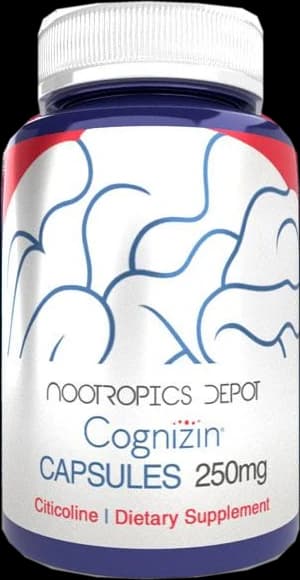
Nootropics Depot Cognizin Citicoline
The one we'd buy. Trial form and dose, a lab report on every batch, 45 cents a day.
- Price per day
- $0.45
- Capsules a day
- 1
- Dose per capsule
- 250 mg
- Form
- Cognizin®
- Evidence
- Preliminary
- Capsules per bottle
- 60
- Against the studies
- Within range
Runner-up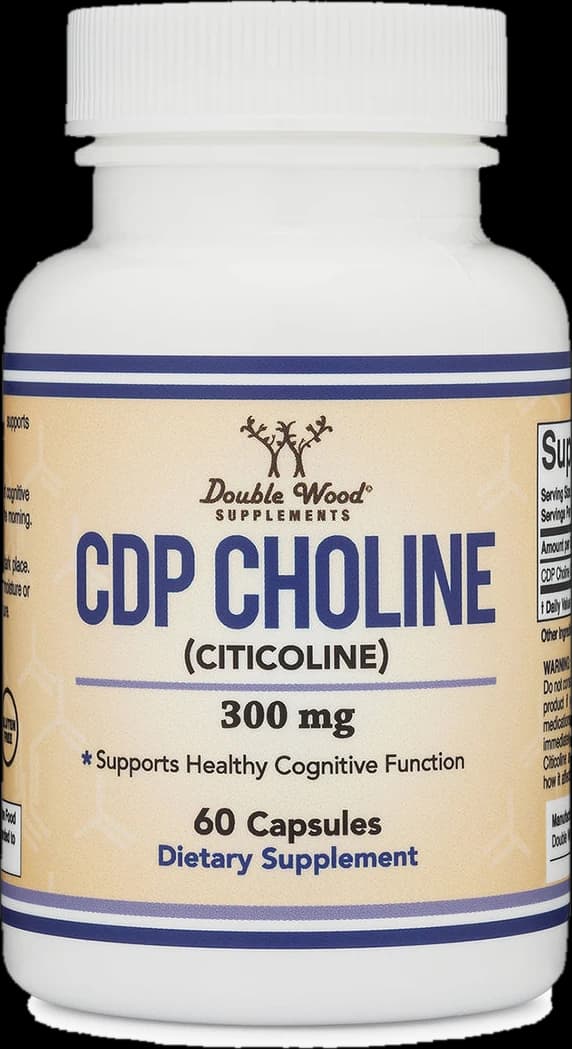 Double Wood CDP CholineAudit rating 7.7/10$0.33 a day4.5/5 from 2,838 Amazon buyers
How we rated these We audited six brain supplements and two single capsules from their labels and published lab reports, weighting dose fit at 40%, evidence 30%, transparency 20% and testing 10%. Every price is a US price. Audited Oct 20, 2026 How we audit We may earn a commission from links on this page, at no extra cost to you. How we make money
In this guide
What our audit found
We checked six brain supplements and two single capsules that contain citicoline, and these five findings matter most if you're buying.
-
None of the six stacks reaches 500 mg
The over-50s memory trial used 500 mg a day. The most any of the six brain supplements gives is 250 mg.3
-
Sodium salt means less citicoline
Vyvamind and Nooceptin list 200 mg of citicoline sodium, which is about 191 mg of citicoline once you allow for the sodium.
-
Lab reports measure different things
Nootropics Depot's lot report measured 255.5 mg of citicoline per capsule (dry basis), from a lab the brand set up.2122 Double Wood's independent report confirms only that the ingredient is citicoline, and its 302.7 mg figure comes from the manufacturer's own test of an earlier lot.2425
-
In the teenage trial, 250 mg alone didn't beat placebo
In the teenage trial, the sponsor's own patent shows the 250 mg group didn't beat placebo on the attention tests. The published paper pooled it with the 500 mg group, so it doesn't show that.219
-
At least five finished trials have no published results
At least five completed trials in healthy adults have no published results that we could find, including PepsiCo's 104-person trial of 250 mg a day.1829303132
Best citicoline supplements
Nootropics Depot's capsule is 250 mg of Cognizin, the dose and the branded form the trials used, and it's the one we'd choose. Double Wood's is 300 mg of generic citicoline for about a quarter less a capsule, with a refund on the first bottle even if you've opened it.
It's Cognizin at the trials' starting dose, and every batch has a lab report from a lab the brand set up. That's 1 capsule for 250 mg, 2 for the 500 mg used in the over-50s memory trial.
- 250 mg a day
- 1 capsule, $0.45 a day
- 500 mg a day
- 2 capsules, $0.90 a day
- Testing
- A lab report for every lot with the amount measured, from a lab the brand founded
- Refund
- Unopened bottles only, 30 days
- Capsule
- Vegetable cellulose
- Dose fit 40%Dose fit 100
- Evidence 30%Evidence 40
Citicoline's evidence grade is preliminary.
- Transparency 20%Transparency 95
Cognizin is named, but the label doesn't state the salt form.
- Testing 10%Testing 100
- nootropicsdepot.com direct
- Listed price
- $26.99
- Per serving
- $0.45
- Status
- In stock
- Amazon (official store)
- Price
- Check price on Amazon
- Status
- In stock
Generic citicoline for about a quarter less a capsule, with a refund on an opened first bottle. Two capsules give 600 mg, above the 500 mg a day the EU and UK allow in a supplement.
- 300 mg a day
- 1 capsule, $0.33 a day
- 600 mg a day, above the EU and UK 500 mg supplement cap
- 2 capsules, $0.67 a day
- Testing
- An independent lab report for the lot (identity only) plus the manufacturer's own
- Refund
- First bottle, opened or not, 30 days
- Capsule
- Gelatin
- Dose fit 40%Dose fit 100
- Evidence 30%Evidence 40
Citicoline's evidence grade is preliminary.
- Transparency 20%Transparency 90
Generic, and the label doesn't state the salt form.
- Testing 10%Testing 70
The outside report confirms identity only, and the amount comes from the manufacturer's lab.
- doublewoodsupplements.com direct
- Listed price
- $19.95
- Per serving
- $0.33
- Status
- In stock
- Amazon (official store)
- Price
- Check price on Amazon
- Status
- In stock, non-returnable
Citicoline in brain supplements
Single-ingredient citicoline products are capped by citicoline's preliminary evidence grade, so a stack whose other ingredients have stronger evidence can score higher. Our pick is the best citicoline capsule, and this table ranks the audited stacks that contain it.
Brain supplements we've audited that contain citicoline
Cognizin
$1.67 of the stack per 250 mg of citicoline
Generic, sodium salt, 191 mg citicoline
$3.05 of the stack per 250 mg of citicoline
Generic, sodium salt, 191 mg citicoline
$2.92 of the stack per 250 mg of citicoline
Cognizin per website, not on label
$2.30 of the stack per 250 mg of citicoline
Cognizin
$39.75 of the stack per 250 mg of citicoline
Generic
$3.00 of the stack per 250 mg of citicoline
The cost column is each formula's whole price for a day, scaled to 250 mg of citicoline as a fraction of a serving, not a dose to take, so it isn't the price of the citicoline alone. If citicoline is why you're buying, a brain supplement is the expensive way to get it, since a single-ingredient capsule gives you 250 or 300 mg for 33 to 45 cents.2023
Is citicoline worth buying, and who it suits
Citicoline may be worth trying if you're over 50, but give it time and judge it by test results rather than how you feel. It has more trials in healthy people than any other choline supplement, though they're small and less clear than its reputation suggests. Across seven controlled studies, attention-test benefits appeared after two to four weeks at 250 to 500 mg a day. One memory test showed an improvement after twelve weeks at 500 mg in adults over 50. The best-run trial missed its main measure.
The case for trying citicoline comes partly from its record at high doses and partly from the amounts sold in capsules. In the largest stroke trial, 1,148 patients took 2,000 mg a day for six weeks.12 A Cochrane review of ten trials found little or no difference from placebo in serious side effects, though it says the full safety profile is still unknown.14 A 250 or 500 mg capsule is well below 2,000 mg, and bottles often contain the amounts used in trials, unlike most other ingredients in brain supplements.
Getting enough into a capsule usually isn't the problem. The question is how much you can expect. The evidence points to a small, slow change in attention after two to four weeks or more of daily use, perhaps too small to notice without a test.
CDP-choline, cytidine diphosphate choline and citicoline are all names for cytidine 5'-diphosphocholine. It's about 21% choline by weight, so a 250 mg capsule gives you about 53 mg of choline.9 Cognizin is Kyowa Hakko's branded version, made by fermentation and used in nearly every positive trial. "Choline" on its own on a label usually means choline bitartrate, a cheaper salt with no cognitive trial support at supplement doses.
Adults over 50 who've noticed their memory slipping have the best case for trying citicoline, because they resemble the trial population. The case holds if they're willing to take 500 mg a day for three months before deciding, and to judge it on something concrete rather than on how they feel.
For younger, healthy adults, the evidence comes from the thinner attention data at 250 to 500 mg. In the single-dose study, people who already scored well did slightly worse after citicoline, the opposite of what the "brain energy" marketing implies.6
If you want something you can feel the day you take it, caffeine with theanine is the pairing with same-day trials. The citicoline trials measured test scores after weeks of use, not how people felt.
Under-18s should skip it, because the EU and UK label rule says it isn't for children.16 So should anyone taking levodopa, because the drug label warns the two interact.15 For side effects and safety in full, the EU food safety regulator's 2013 review of citicoline is the most complete public assessment.
How much to take, and when
The trials tell you how much citicoline to look for on a label, and how long any effect took to appear.
- Study dose benchmark
- 250 mg a day
- Doses in studies with a benefit
- 250 mg to 500 mg a day
- Most relevant studied dose for over-50s
- 500 mg a day for 12 weeks, in adults over 50 with memory complaints
- Time to any effect
- 2 to 12 weeks of daily dosing in the trials that showed a benefit. Single doses helped only people with low starting scores.
The healthy-adult trials used 250 to 1,000 mg a day. The blinded positive results came at 250 or 500 mg a day, apart from Knott's single doses, where 1,000 mg helped only people with low starting scores. The 1,000 mg daily trial found no benefit in its main analysis, according to the regulator's reading of the full paper.48
Examine's page gives 500 to 2,000 mg as the standard dose in its August 2025 update, a broader range than the positive trials used.27 Healthline recommends 500 mg but cites a single-dose study in 24 men for that amount.26
That 2,000 mg figure comes from the stroke and brain-injury trials, where it didn't work,1213 and from the drug label. Somazina, the prescription version sold in Spain, is dosed at 500 to 2,000 mg a day depending on severity.15 EU and UK law caps food supplements at 500 mg a day and requires labels to say they're not for children.16
Citicoline's timing is less settled than the blogs suggest. The positive trials dosed once a day for two to twelve weeks, with breakfast in the one that specified, and none tested a single dose against a day of mental work.
Mind Lab Pro's blog, updated in July 2026, describes citicoline as "more effective when taken every day", without a citation for that claim. It also suggests cycling eight to twelve weeks on and a week off, with no trial behind that advice anywhere we could find.28
Morning is a reasonable time to take it because that's when the trials gave it, though nobody has shown that the time of day matters.
What the trials found
Our evidence grade for citicoline rests on the human trials, the positive ones and the ones that found nothing.
PreliminarySmall trials with mixed results, mostly funded by the Cognizin maker. The EU regulator found the memory claim not established in 2024.
Citicoline is something your body already makes, as a step between choline and phosphatidylcholine, the main fat in cell membranes. When you swallow it, it's broken down into choline and cytidine, which turns into uridine in humans before it goes any further.10
Both reach the brain. Choline goes toward acetylcholine and membranes, while uridine goes toward the nucleotides cells use for energy and repair. That's a plausible theory, though a 2014 review by a citicoline researcher concluded there was "no adequate description" of how it works.11 In 2024, the EU regulator reviewed the same evidence and found no convincing mechanism by which extra citicoline, beyond what your body makes, would improve memory.8
The human trials in healthy people include positive results and ones that found no benefit.
| Study | Who took part | Dose and length | What happened |
|---|---|---|---|
| Spiers 19964Randomized, double-blind, placebo-controlled | 95 healthy adults aged 50 to 85, about half of them classed as having below-par memory | 1,000 mg a day for 3 months | No clear benefitNo effect on logical memory in the full group or the weaker-memory subgroup, by the EU regulator's reading of the full paper. The abstract claims a subgroup gain on delayed recall. A later unblinded crossover at 2,000 mg isn't usable. |
| Alvarez 19975Open-label randomized crossover, no washout | 24 older adults with memory complaints, most of them on other medication | 500 or 1,000 mg a day for 4 weeks | Showed a benefitBetter word and object recall, no change in recognition. Nobody was blinded, so the EU regulator drew no conclusions from it. |
| McGlade 20121Randomized, double-blind, placebo-controlled | 60 healthy women aged 40 to 60 | 250 or 500 mg a day (Cognizin) for 28 days | Showed a benefitFewer attention-test errors at both doses. Compared day-28 scores only and used one-tailed statistics. Four of the eight authors worked for the Cognizin maker. |
| McGlade 20152Randomized, double-blind, placebo-controlled | 75 healthy males aged 13 to 18 | 250 or 500 mg a day (Cognizin) for 28 days | Showed a benefitBetter attention and motor speed with the two doses pooled. On its own, the 250 mg group didn't beat placebo on the attention tests, according to the sponsor's patent. |
| Knott 2014 and 20156Randomized, double-blind, placebo-controlled crossover, single doses | 24 healthy adults | One 500 mg or 1,000 mg dose | No clear benefitGains only in people with low baseline scores. No effect in average performers, and worse scores in high performers. |
| Al-Kuraishy 20207Placebo-controlled, allocation not reported | 40 medical students aged 21 to 22 | 500 mg a day for 2 weeks | Showed a benefitBetter vigilance and working-memory scores. Small and oddly reported, so it carries little weight here. |
| Nakazaki 20213Randomized, double-blind, placebo-controlled, preregistered | 100 healthy adults aged 50 to 85 with age-associated memory impairment | 500 mg a day (Cognizin) for 12 weeks | No clear benefitThe main outcome, spatial working memory, was no different from placebo. Episodic memory, a secondary outcome, improved by a small amount. Funded by the Cognizin maker. |
- Spiers 19964No clear benefit
Randomized, double-blind, placebo-controlled
95 healthy adults aged 50 to 85, about half of them classed as having below-par memory
1,000 mg a day for 3 months
No effect on logical memory in the full group or the weaker-memory subgroup, by the EU regulator's reading of the full paper. The abstract claims a subgroup gain on delayed recall. A later unblinded crossover at 2,000 mg isn't usable.
- Alvarez 19975Showed a benefit
Open-label randomized crossover, no washout
24 older adults with memory complaints, most of them on other medication
500 or 1,000 mg a day for 4 weeks
Better word and object recall, no change in recognition. Nobody was blinded, so the EU regulator drew no conclusions from it.
- McGlade 20121Showed a benefit
Randomized, double-blind, placebo-controlled
60 healthy women aged 40 to 60
250 or 500 mg a day (Cognizin) for 28 days
Fewer attention-test errors at both doses. Compared day-28 scores only and used one-tailed statistics. Four of the eight authors worked for the Cognizin maker.
- McGlade 20152Showed a benefit
Randomized, double-blind, placebo-controlled
75 healthy males aged 13 to 18
250 or 500 mg a day (Cognizin) for 28 days
Better attention and motor speed with the two doses pooled. On its own, the 250 mg group didn't beat placebo on the attention tests, according to the sponsor's patent.
- Knott 2014 and 20156No clear benefit
Randomized, double-blind, placebo-controlled crossover, single doses
24 healthy adults
One 500 mg or 1,000 mg dose
Gains only in people with low baseline scores. No effect in average performers, and worse scores in high performers.
- Al-Kuraishy 20207Showed a benefit
Placebo-controlled, allocation not reported
40 medical students aged 21 to 22
500 mg a day for 2 weeks
Better vigilance and working-memory scores. Small and oddly reported, so it carries little weight here.
- Nakazaki 20213No clear benefit
Randomized, double-blind, placebo-controlled, preregistered
100 healthy adults aged 50 to 85 with age-associated memory impairment
500 mg a day (Cognizin) for 12 weeks
The main outcome, spatial working memory, was no different from placebo. Episodic memory, a secondary outcome, improved by a small amount. Funded by the Cognizin maker.
Reading the papers gives a less settled picture than the abstracts. Each trial measured something different, whether attention errors in middle-aged women, attention and motor speed in teenage boys, or episodic memory in older adults with memory complaints. Nobody has replicated another trial's result.
Nakazaki 2021, the trial everyone quotes, found no difference from placebo on its main measure of spatial working memory, with a small memory gain on a secondary test.3
Kyowa Hakko, which makes Cognizin, funded or co-authored the three best-known positive trials. At least five completed trials in healthy adults have no published results that we could find, including a 104-person PepsiCo trial of exactly 250 mg a day.1829303132 Missing results make the evidence harder to judge and may hide null findings.
Many products rely on the 250 mg result. It comes from one trial in 60 women aged 40 to 60 that compared scores only at day 28 and used one-tailed statistics.1
For the teenage trial, the published analysis combined the 250 mg and 500 mg groups, but the sponsor's patent reported no attention-test benefit over placebo for the 250 mg group separately.219 That leaves 250 mg as the study dose we use as citicoline's benchmark, and it's also the weakest part of the evidence.
The 2,000 mg a day you'll see on some labels and websites comes mostly from patient trials. The one healthy-adult figure is an unplanned crossover phase of Spiers 1996, after its main 1,000 mg analysis found no benefit.4 ICTUS gave 2,000 mg a day to 1,148 of its 2,298 stroke patients and was stopped because continuing was unlikely to show a benefit.12 COBRIT randomized 1,213 brain-injury patients to the same dose or placebo for 90 days, with no effect on recovery.13 A 2020 Cochrane review of ten stroke trials found little or no difference.14
| Study | Who took part | Dose and length | What happened |
|---|---|---|---|
| ICTUS 201212Randomized, double-blind, placebo-controlled | 2,298 adults within 24 hours of a moderate or severe ischemic stroke | 2,000 mg a day for 6 weeks (1,148 on citicoline) | No clear benefitStopped early for futility. No difference in recovery at 90 days (odds ratio 1.03). |
| COBRIT 201213Randomized, double-blind, placebo-controlled | 1,213 adults with traumatic brain injury | 2,000 mg a day for 90 days | No clear benefitNo improvement in functional or cognitive outcome at 90 or 180 days. |
| Cochrane 202014Systematic review of 10 randomized trials | 4,281 people with acute ischemic stroke | 500 to 2,000 mg a day, oral or intravenous | No clear benefitLittle or no difference in death, dependence or function. Every trial was at high risk of bias and harms were poorly reported. |
- ICTUS 201212No clear benefit
Randomized, double-blind, placebo-controlled
2,298 adults within 24 hours of a moderate or severe ischemic stroke
2,000 mg a day for 6 weeks (1,148 on citicoline)
Stopped early for futility. No difference in recovery at 90 days (odds ratio 1.03).
- COBRIT 201213No clear benefit
Randomized, double-blind, placebo-controlled
1,213 adults with traumatic brain injury
2,000 mg a day for 90 days
No improvement in functional or cognitive outcome at 90 or 180 days.
- Cochrane 202014No clear benefit
Systematic review of 10 randomized trials
4,281 people with acute ischemic stroke
500 to 2,000 mg a day, oral or intravenous
Little or no difference in death, dependence or function. Every trial was at high risk of bias and harms were poorly reported.
What it's stacked with
These are the ingredients citicoline most often sits next to in brain supplements, and what the evidence says about each pairing.
In brain supplements, citicoline is mostly there to cover choline, next to a stimulant or next to bacopa for memory. The one combination with a trial behind it is citicoline plus caffeine in a drink. In 60 adults, that drink improved reaction time and attention compared with a placebo drink, but without a comparison against caffeine alone, we can't tell what citicoline added.17
There's no trial of citicoline plus alpha-GPC and no obvious reason to take both, since they supply the same choline, though alpha-GPC provides about twice as much per milligram.
If you're choosing between them, alpha-GPC gives you more choline for the amount you take, while citicoline has the better trial record in healthy adults.
Questions people ask
Can you take citicoline every day?
What is the best time of day to take citicoline?
Can you take citicoline and alpha-GPC together?
How does citicoline make you feel?
Is CDP-choline the same as citicoline?
How much choline is in citicoline?
Sources
32 sources cited
- McGlade E, et al. Improved attentional performance following citicoline administration in healthy adult women. Food Nutr Sci, 2012. 60 women aged 40 to 60, 250 or 500 mg a day for 28 days. Accessed Sep 18, 2026. DOI 10.4236/fns.2012.36103
- McGlade E, et al. The effect of citicoline supplementation on motor speed and attention in adolescent males. J Atten Disord, 2019 (online 2015). 75 males aged 13 to 18, 250 or 500 mg a day for 28 days. Accessed Sep 18, 2026. PMID 26179181
- Nakazaki E, et al. Citicoline and memory function in healthy older adults: a randomized, double-blind, placebo-controlled clinical trial. J Nutr, 2021. 100 adults aged 50 to 85, 500 mg a day for 12 weeks; primary outcome null. Accessed Sep 18, 2026. PMID 33978188
- Spiers PA, et al. Citicoline improves verbal memory in aging. Arch Neurol, 1996. 95 adults aged 50 to 85, 1,000 mg a day for 3 months. Abstract and EFSA's 2024 reading of the full paper. Accessed Sep 18, 2026. PMID 8624220
- Alvarez XA, et al. Citicoline improves memory performance in elderly subjects. Methods Find Exp Clin Pharmacol, 1997. 24 participants, open-label crossover. Accessed Sep 18, 2026. PMID 9203170
- Knott V, et al. Neurocognitive effects of acute choline supplementation in low, medium and high performer healthy volunteers. Pharmacol Biochem Behav, 2015 (with the 2014 J Psychopharmacol gating study, PMID 25315828). 24 participants, single 500 or 1,000 mg doses. Accessed Sep 18, 2026. PMID 25681529
- Al-Kuraishy HM, Al-Gareeb AI. Citicoline improves human vigilance and visual working memory: the role of neuronal activation and oxidative stress. Basic Clin Neurosci, 2020. 40 students, 500 mg a day for 2 weeks. Accessed Sep 18, 2026. PMID 33613880
- EFSA NDA Panel. Citicoline and support of the memory function: evaluation of a health claim. EFSA Journal, 2024. Conclusion: cause and effect not established. Accessed Sep 18, 2026. DOI 10.2903/j.efsa.2024.8861
- EFSA NDA Panel. Scientific opinion on the safety of citicoline as a novel food ingredient. EFSA Journal, 2013. The regulator's safety assessment, and choline content (about 106 mg per 500 mg). Accessed Sep 18, 2026. DOI 10.2903/j.efsa.2013.3421
- Wurtman RJ, et al. Effect of oral CDP-choline on plasma choline and uridine levels in humans. Biochem Pharmacol, 2000. Accessed Sep 18, 2026. PMID 10974208
- Grieb P. Neuroprotective properties of citicoline: facts, doubts and unresolved issues. CNS Drugs, 2014. Accessed Sep 18, 2026. PMID 24504829
- Dávalos A, et al. Citicoline in the treatment of acute ischaemic stroke: an international, randomised, multicentre, placebo-controlled study (ICTUS trial). Lancet, 2012. 2,298 patients, 2,000 mg a day; stopped for futility. Accessed Sep 18, 2026. PMID 22691567
- Zafonte RD, et al. Effect of citicoline on functional and cognitive status among patients with traumatic brain injury: the COBRIT randomized clinical trial. JAMA, 2012. 1,213 patients, 2,000 mg a day for 90 days; null. Accessed Sep 18, 2026. PMID 23168823
- Martí-Carvajal AJ, et al. Citicoline for treating people with acute ischemic stroke. Cochrane Database Syst Rev, 2020. 10 trials, 4,281 people. Accessed Sep 18, 2026. PMID 32860632
- AEMPS (Spanish medicines agency). Somazina (citicoline) summary of product characteristics: dosing 500 to 2,000 mg a day, and the levodopa interaction warning. Accessed Sep 18, 2026. CIMA FT 69416
- Commission Implementing Decision 2014/423/EU authorising citicoline as a novel food ingredient: food supplements up to 500 mg a day, not for children. Via legislation.gov.uk. Accessed Sep 18, 2026. Decision 2014/423/EU
- Bruce SE, et al. Improvements in concentration, working memory and sustained attention following consumption of a natural citicoline-caffeine beverage. Int J Food Sci Nutr, 2014. 60 adults, drink versus placebo. Accessed Oct 19, 2026. PMID 25046515
- ClinicalTrials.gov NCT05000190. PepsiCo Global R&D: citicoline 250 mg a day versus placebo in 104 healthy adults, completed July 2022, no results posted. Accessed Oct 19, 2026. NCT05000190
- US patent 11583546B2 (Kyowa Hakko Bio and University of Utah Research Foundation). Reports the adolescent trial's 250 mg and 500 mg arms separately; the 250 mg arm did not differ from placebo on the CPT-II attention measures. Accessed Sep 18, 2026. US11583546B2
- Nootropics Depot. Cognizin Citicoline Capsules 250 mg: product page, Supplement Facts label, price and returns policy. Accessed Oct 19, 2026. nootropicsdepot.com
- Omnient Labs for Nootropics Depot. Certificate of analysis, Cognizin Citicoline Capsules 250 mg, lot CZCCS1082826, Aug 28, 2026: 255.5 mg citicoline per capsule by UPLC. Accessed Oct 19, 2026. Lot COA (PDF)
- Nootropics Depot. Meet our third party labs: Omnient Labs "was started as an ISO accredited lab to do advanced lab testing for Nootropics Depot." Accessed Oct 19, 2026. nootropicsdepot.com
- Double Wood Supplements. CDP Choline (Citicoline) 300 mg: product page, Supplement Facts label, price and refund policy. Accessed Oct 19, 2026. doublewoodsupplements.com
- Colmaric Analyticals (ISO/IEC 17025, PJLA 86258) for Double Wood LLC. Certificate of analysis, CDP Choline lot 2530701, May 6, 2026: assay by HPLC, specification 300 mg per serving, result "Positive". Accessed Oct 19, 2026. Lab report (PDF)
- Brand Nutraceuticals for Double Wood LLC. Manufacturer certificate of analysis, CDP Choline lot 2511300, made June 2025, approved Jul 9, 2025: 302.7 mg per capsule by in-house HPLC. Accessed Oct 19, 2026. Manufacturer COA (PDF)
- Healthline. Citicoline: uses, benefits, dosage, and side effects. Nov 8, 2023. Cites a single-dose study for its 500 mg "recommended dosage". Accessed Sep 18, 2026. healthline.com
- Examine. CDP-choline benefits, dosage, and side effects. Updated Aug 28, 2025. Gives 500 to 2,000 mg a day as the standard dose. Accessed Sep 18, 2026. examine.com
- Mind Lab Pro. Can you take citicoline every day? Updated Jul 8, 2026. Daily-use and cycling advice with no citicoline-specific citation. Accessed Sep 18, 2026. mindlabpro.com
- ClinicalTrials.gov NCT02705066. Kyowa Hakko Bio, Cognizin 250 or 500 mg versus placebo in adults aged 40 to 60, brain energy measures by MRS. Completed, no results posted. Accessed Oct 21, 2026. NCT02705066
- ClinicalTrials.gov NCT03444662. Kyowa Hakko Bio, citicoline with omega-3 versus omega-3 and placebo in adults 55 and over, 16 weeks. Completed, no results posted. Accessed Oct 21, 2026. NCT03444662
- ClinicalTrials.gov NCT04967157. Kirin Holdings, Cognizin versus placebo on attention in adults aged 35 to 75, 12 weeks. Completed, no results posted. Accessed Oct 21, 2026. NCT04967157
- ClinicalTrials.gov NCT06906848. Kirin Holdings, Cognizin versus placebo on cognitive performance in adults aged 18 to 35, 12 weeks. Completed, no results posted. Accessed Oct 21, 2026. NCT06906848
Top Rated Nootropics is an independent research and review platform. We are passionate supplement researchers, not medical professionals. Always consult a qualified healthcare provider before starting any supplement regimen. These statements have not been evaluated by the Food and Drug Administration. These products are not intended to diagnose, treat, cure, or prevent any disease.