Mind Lab Pro Review 2026
 James BevanUpdated October 19, 2026
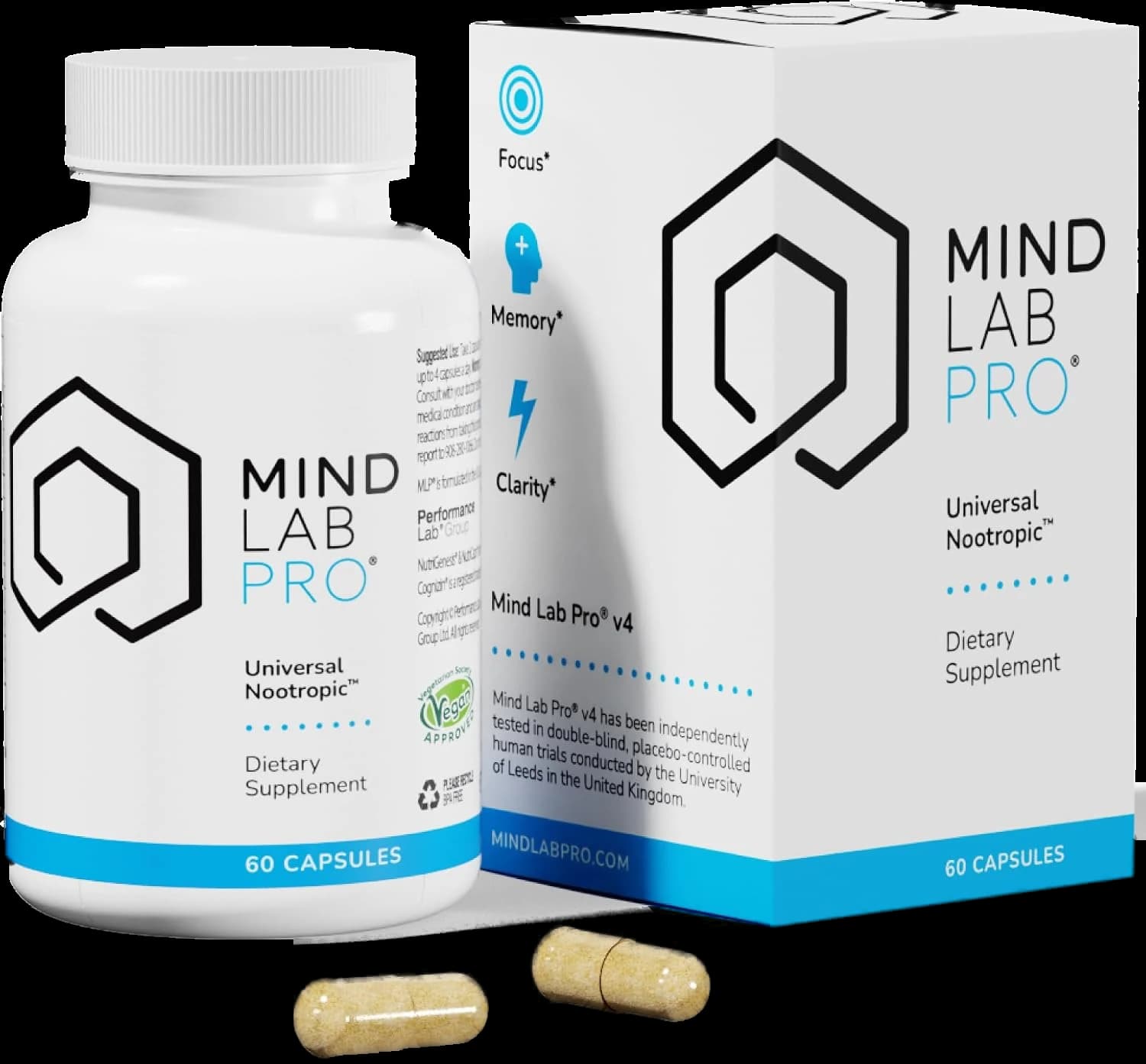
Mind Lab Pro is the caffeine-free brain supplement that so many reviews recommend. But is it really worth the hype, and does it actually do what it claims? To find out, we've taken a closer look at all 11 ingredients, examined the published scientific research, and analyzed what expert reviewers say and what 1,241 Amazon ratings show.
Quick verdict
- Price per serving
- $2.30
- Doses in range
- 2 of 8
- Caffeine
- None
- Money-back guarantee
- 30 days
- Third-party testing
- Partly, buyer-only reports
- Servings per bottle
- 30
$2.66 a day less than our picks at the studied doses, see the list
Scored higher with similar ingredients
- Transparent Labs CognitionAudit rating 7.8/10
4 of 6 ingredients at studied amounts
Shares 4 ingredients with Mind Lab Pro
Check price$1.67 a day
4.9/5 from 66 buyers (brand site)
- VyvamindAudit rating 6.4/10
2 of 4 ingredients at studied amounts
Shares 3 ingredients with Mind Lab Pro
Check price$2.33 a day
3.9/5 from 79 Amazon buyers
We may earn a commission from links on this page, at no extra cost to you. How we make money
In this review
What's good, and what isn't
Pros
- Citicoline (250 mg) and theanine (100 mg) are within the doses used in studies that showed a benefit
- Three placebo-controlled trials of the finished formula, published 2023 to 2025 and funded by the company
- Amazon buyers rate it 4.0 out of 5 across 1,241 ratings
Cons
- Lion's mane is 1,300 mg short, tyrosine about 1,858 mg, phosphatidylserine 200 mg, rhodiola 120 mg, bacopa 100 mg and pine bark 75 mg short of the doses we use as benchmarks
- The batch certificate is only available after you buy, and the testing lab is never named
- The guarantee covers one bottle on your first order, and you have to finish it first
What our audit uncovered
We checked Mind Lab Pro's label, trials and prices, and these five findings matter most if you're buying.
Six of the eight main ingredients fall short of the studies
Bacopa, lion's mane, phosphatidylserine, tyrosine, rhodiola and pine bark all come in under the dose we use as the benchmark, and tyrosine is furthest off at about 142 mg against 2,000 mg.161920224425
The advertised 47 percent is about 12 percent
The studies page credits a 105-person trial with a 47 percent cut in processing time, but that trial's median reaction time fell from 330.5 to 290 milliseconds, about 12 percent.10
Four capsules cost $4.60 a day and still fall short
Doubling the dose, as the help center suggests, still leaves lion's mane 800 mg, tyrosine about 1,716 mg and phosphatidylserine 100 mg under the studies, and the bottle lasts 15 days.5
Three trials of the finished formula, all company-funded
All three ran at the University of Leeds between 2023 and 2025, and the randomized 2025 trial found no change in accuracy or reaction time after 60 days.91011
The doses that matter, priced separately
The two ingredients at studied amounts cost $0.63 a day bought separately, and adding phosphatidylserine, bacopa and lion's mane at their studied amounts comes to $2.16, against $2.30 for Mind Lab Pro.
Why Mind Lab Pro scored 5.5 out of 10
- Dose fit40%50
Citicoline and theanine sit inside the doses used in studies that showed a benefit, each at the bottom of its range. Bacopa, lion's mane, phosphatidylserine, tyrosine, rhodiola and pine bark fall short, by 75 mg to about 1,858 mg.
- Evidence30%30
Evidence only counts in full when the dose matches the studies. Lion's mane has 28 percent of the 1,800 mg dose that showed a benefit, so it earns 28 percent of the credit, and its evidence is preliminary to begin with.
- Transparency20%95
Every dose, every standardization and the capsule material are printed. The one gap is lion's mane, listed as "mycelium and fruit" with no split between the two.
- Testing10%70
The sales page claims "Third-party tested and verified". A lab report exists for each batch, but only buyers can see it, by entering a batch number, and the lab isn't named. ConsumerLab lists the product as approved, with the test date behind its paywall, and it isn't listed by NSF or USP.
Worked out under method audit-v2.0. How the rating is built
Score history
Oct 21, 2026 Rating lowered (5.8 to 5.5)
Its trial credit came off because a trial now has to beat placebo on its main measures, and only one of the memory trial's five measures did.
Oct 21, 2026 Rating lowered (6.7 to 5.8)
We raised the benchmarks for phosphatidylserine, rhodiola and pine bark after re-reading their trials and now count its N-acetyl-L-tyrosine by the tyrosine it supplies, so six of its eight doses fall short.
Oct 21, 2026 Corrections after a check against the sources
We fixed several statements, including the pine bark arithmetic, the largest dose gap and which trial each dose card cites.
Oct 21, 2026 Guarantee and testing facts corrected
The brand's terms give 30 days rather than 60, and its batch certificate is only available after you buy, so testing now reads Partly instead of Yes.
Oct 20, 2026 Buyer rating taken from one source
We stopped averaging Amazon and Trustpilot together, so the figure shown is Amazon's, with Trustpilot's still given in the review.
Oct 20, 2026 Rating raised (6.5 to 6.7)
Its two published trials of the finished product now earn our product-trial credit, which outweighed citicoline's evidence being graded down.
Oct 19, 2026 Label and price re-checked
The label and the brand-site price were unchanged, and the Amazon listing turned out to be sold by a third-party seller rather than the brand.
Aug 26, 2026 Rated under our current four-factor method (6.5)
Every product was rescored when the method changed, so all ratings on the site are worked out the same way.
Aug 19, 2026 First audit published
We checked the label, compared each dose with the human research and published the review.
A label that prints every amount looks like it should score higher than 5.5. Six of the eight main ingredients, though, come in at less than the doses we use as benchmarks. Tyrosine is the biggest gap, at about 142 mg of tyrosine against the 2,000 mg the studies used. Lion's mane, the ingredient the brand talks about most, has 500 mg against 1,800 mg. Citicoline and theanine reach the amounts that showed results. The company's trials of the finished formula earn no extra credit, because only one of the memory trial's five measures beat placebo and the 2025 trial found no change in accuracy or reaction time.
Two changes would raise it. The easy one is naming the lab and publishing a lab report anyone can open, instead of making buyers enter a number from a bottle they already own. Raising lion's mane, bacopa, phosphatidylserine and tyrosine to the amounts in the studies would be harder. It would require bigger capsules, a higher price or both, while the $69.00 bottle price is already the complaint we saw most often in reviews.
The claims, checked
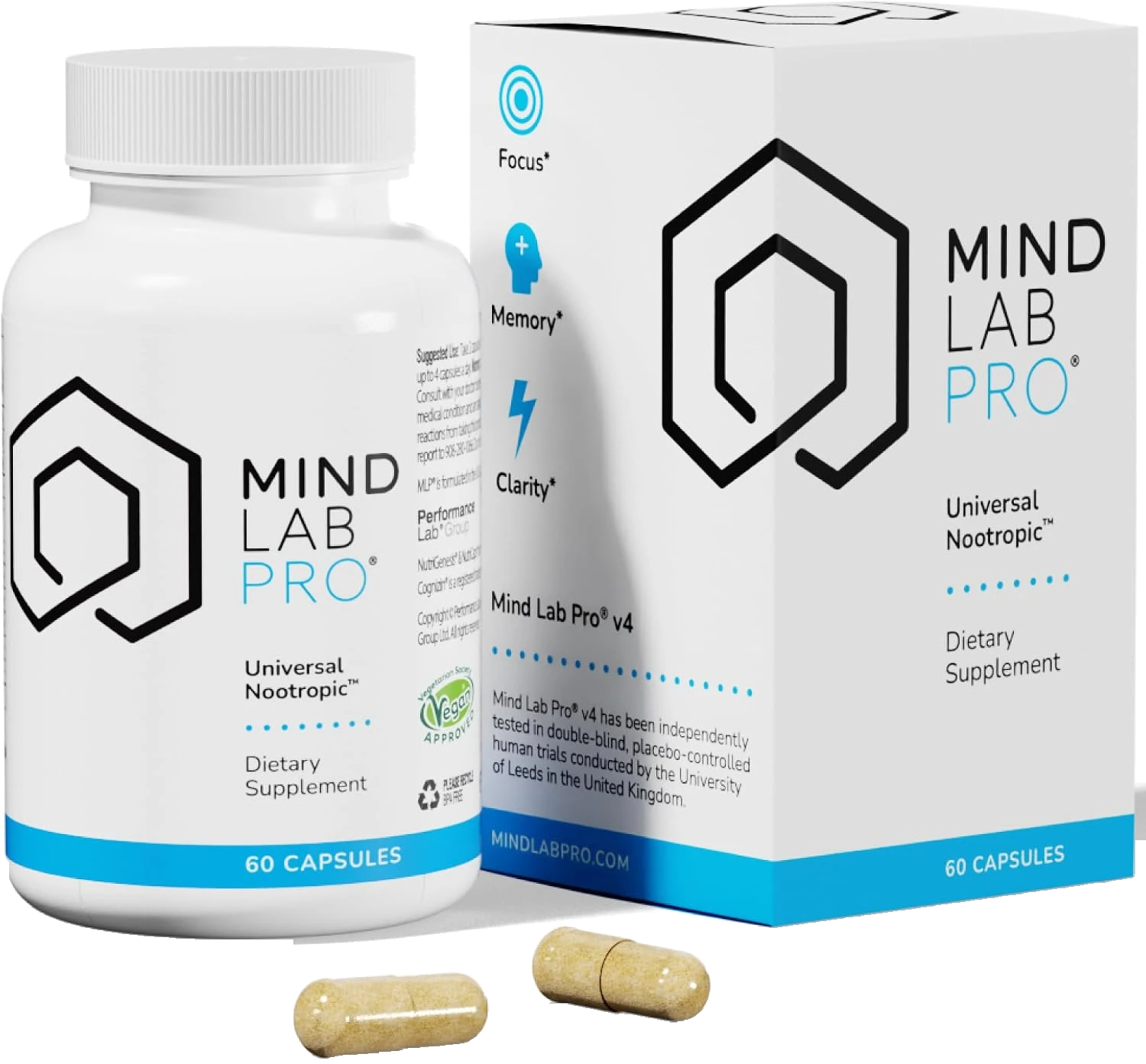
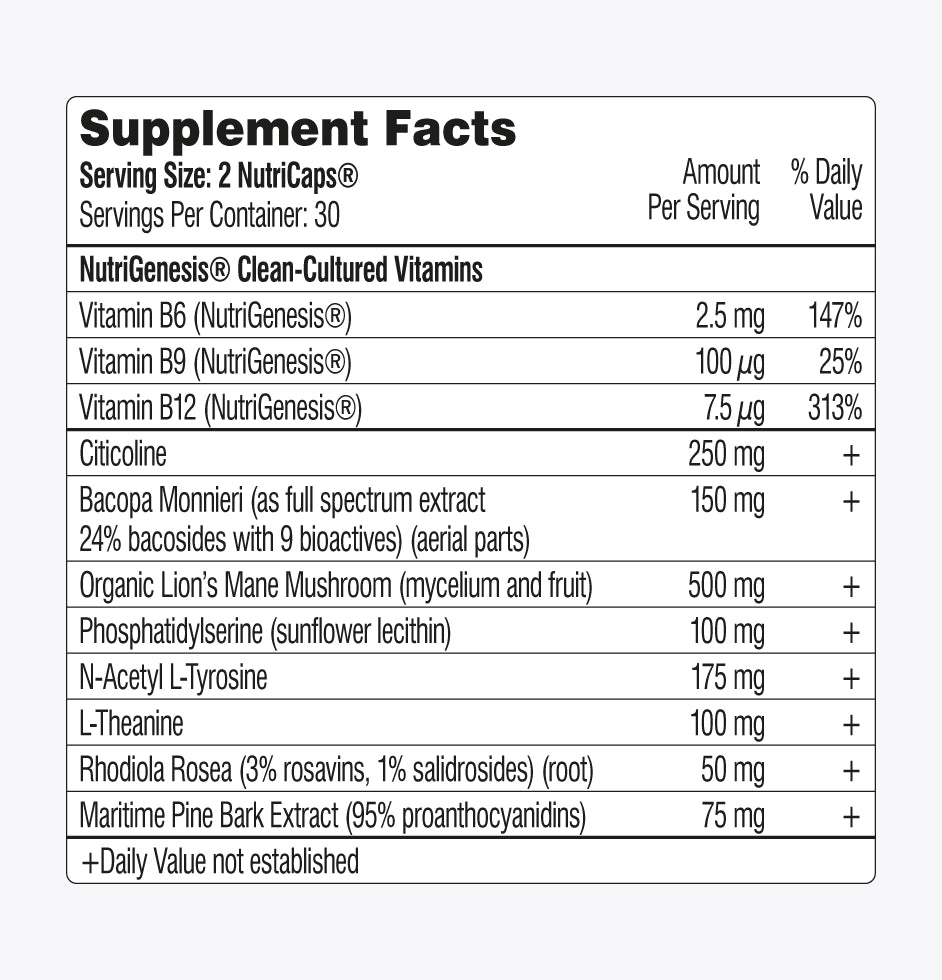
We checked the official facts panel, and it matches the ingredients page line for line.1 The 2025 Leeds trial lists the same eleven doses in its methods, so it tested the bottle currently on sale, and the 2023 reaction-time paper prints a table of its 11 ingredients.21011 There is one small difference. The ingredients page describes the citicoline "as Cognizin," while the facts panel says only "Citicoline." That makes the branded form a website statement rather than something confirmed on the label.
Across two pullulan capsules, the main ingredients total about 1,400 mg, which fits. The unusual part is the wording. Opti-Nutra is a British company, and the bottle says "FOOD SUPPLEMENT," even though the product is made in New Jersey and sold in the US with a "Supplement Facts" panel.6 The front also says "v4.0," while the brand's version history shows that what's inside hasn't changed since October 2018.38
“the ONLY nootropic formula scientifically proven to enhance brainpower”
PartlyThe product page also says Mind Lab Pro was "shown to enhance brainpower in multiple double-blind, placebo-controlled human trials."3 Those trials exist, which remains unusual. A PubMed search for the product finds one indexed paper, and a second appears under the authors' names.12
All three trials took place at the University of Leeds, with funding from the brand's side. Opti-Nutra funded the memory trial,9 Performance Lab Group funded the 2025 brain-imaging trial,11 and the reaction-time study received "a grant from ics-digital."10 The brand's studies page discloses the funding for two of them. Even so, its description of research "conducted independently by the University of Leeds" sits awkwardly beside those details.8
The findings are narrower than "proven." The memory trial assigned 36 people to Mind Lab Pro and 13 to placebo for 30 days, using matched allocation rather than true randomization. Of the five memory measures it compared with placebo, only delayed recall clearly came out ahead. Immediate recall sat right at the edge of significance, and auditory memory, visual memory and visual working memory didn't differ.9
The 2025 study was the strongest of the three because it was properly randomized, although it was registered only after it finished. Its abstract reports that "no improvements in choice accuracy or reaction times were observed" after 60 days. The change was in the pattern of brain-wave activity measured by EEG.11 The accompanying press release omitted the first finding.
“47% reduction in information processing time”
Doesn't hold upA reaction-time study of 105 people is the source the studies page gives for this figure. We couldn't find that number in the paper. Median simple reaction time dropped from 330.5 to 290 milliseconds, or about 12 percent.10
“Third-party tested and verified”
PartlyThe product page makes this promise,3 and its quality page explains that an outside lab tests finished batches and lets buyers enter a bottle's batch number to view the lab report. That's more access than most brands provide.6 However, the company doesn't name the lab, and you can't reach the report until after buying a bottle.
Mind Lab Pro does publish its testing specifications, which is unusual. Its specification lists the main ingredients' content as above 90 percent of the label amount, checked "HPLC / By Input," so some figures may come from the amounts added in manufacturing rather than a lab assay. Microbes and heavy metals must remain within USP limits. Lead must stay below 1 part per million.7 We could confirm one of the four badges shown on the sales page. ConsumerLab's public listing names one Mind Lab Pro product as "voluntarily tested and Approved for quality" through its certification program, although the test date is behind a paywall.27
The remaining badges are less convincing. Labdoor's listing says "This product is being tested" and gives no grade.28 The "Illuminate Labs Certified" badge comes from a supplement seller that also reviews Mind Lab Pro,31 and the product doesn't appear in either the NSF or USP listings.2930
“30-day money-back guarantee”
PartlyThe guarantee exists, but its terms are narrower than that phrase suggests.3 It applies only to one bottle from your first order. You must take it as directed until the bottle is empty, submit the claim within 60 days of delivery and accept a refund without the shipping cost.4 You can use it after opening the bottle, unlike the unopened-only policies from Vyvamind and Nooceptin. A second opened bottle isn't covered, so this isn't a general try-it-and-send-it-back offer.
“Rated 4.5 out of 5 stars (Excellent) based on 2655 reviews”
PartlyThe product page gives two ratings for the same collection of reviews. Another area says "Read all 2,655 reviews (Rated 4.8 out of 5 stars)."3 Those reviews were collected by the brand. The independent figure comes from Amazon, where 1,241 ratings average 4.0.39 Trustpilot has another 82 reviews averaging 4.2.32
What's inside, audited
8 ingredients checked, 2 within range, 6 short.
Within range (L-theanine, citicoline). Short (phosphatidylserine, L-tyrosine, rhodiola, bacopa, lion's mane, pine bark).
Cognizin (per website, not on label) · Preliminary evidence
Doses used in studies that showed a benefit
Mind Lab Pro has 250 mg, inside the 250 mg to 500 mg used in studies that showed a benefit.13
Study dose benchmark from McGlade 2012, 250 or 500 mg a day, 28 days13
Citicoline is where Mind Lab Pro comes closest to the doses used in studies that showed a benefit, and it uses Cognizin, the form used in the trials. Its 250 mg exactly matches the study dose we use as its benchmark, although that figure needs context. One small trial in 60 women aged 40 to 60 compared only their end-of-study scores,13 while a better-known trial in teenage boys pooled the 250 mg and 500 mg groups.14 The sponsor's patent reports the groups separately, and the 250 mg group didn't beat placebo on the attention tests.41 The strongest trial gave adults over 50 with memory complaints 500 mg a day for 12 weeks. Even then, the improvement appeared on secondary memory tests rather than the main test.15 We count 250 mg as enough, but 500 mg has firmer support.
from sunflower lecithin · Moderate evidence
Doses used in studies that showed a benefit
Mind Lab Pro has 100 mg. The study dose we use as this ingredient's benchmark is 300 mg, so it's 200 mg short.20
Study dose benchmark from Crook 1991, 100 mg three times a day, 12 weeks20
Phosphatidylserine needs the same kind of qualification. The 100 mg is a third of the 300 mg we use as the benchmark, which comes from the clearest result, 300 mg of a cow-brain extract that is no longer sold.20 A 2010 trial of soy-based phosphatidylserine at 100 mg or 300 mg found scores rose in every group, placebo included. Only in people who started with low scores did memory rise against their own starting point while the placebo group's stayed level.21 That's why 100 mg no longer counts as a studied dose for us.
Moderate evidence
Doses used in studies that showed a benefit
Mind Lab Pro has 100 mg, inside the 100 mg to 400 mg used in studies that showed a benefit.43
Study dose benchmark from Dassanayake 2023, One dose of 100, 200 or 400 mg43
Theanine has better evidence. A 2026 analysis of 31 randomized trials found that one 200 mg dose improved choice reaction time,23 and in a four-week trial of 30 adults on 200 mg daily, verbal fluency and executive function scores rose, but only verbal fluency, in the people who started lowest, beat placebo.40 Mind Lab Pro provides 100 mg, which is half as much but still enough, since studies at 100 mg have shown a benefit too.
organic, mycelium and fruit body · Preliminary evidence
Doses used in studies that showed a benefit
Mind Lab Pro has 500 mg. The study dose we use as this ingredient's benchmark is 1,800 mg, so it's 1,300 mg short.19
Study dose benchmark from Docherty 2023, 1.8 g, one dose and then 28 days19
Lion's mane is where the label and the marketing separate. Mind Lab Pro provides 500 mg, 1,300 mg less than the 1,800 mg used in a 28-day trial of 41 adults. That study found little beyond a faster Stroop test one hour after the first dose.19 The trial that did find a benefit used 3,000 mg a day of tablets made of 96 percent dried fruiting body powder, about 2,880 mg of powder, in 30 adults aged 50 to 80 with mild cognitive impairment.18 This label says "mycelium and fruit" but doesn't print how much of either it contains, while those trials used the fruiting body.
full-spectrum, 24% bacosides · Strong evidence
Doses used in studies that showed a benefit
Mind Lab Pro has 150 mg. The study dose we use as this ingredient's benchmark is 250 mg, so it's 100 mg short.42
Study dose benchmark from Raghav 2006, 125 mg twice a day, 12 weeks42
Bacopa comes in at 150 mg, 100 mg less than the studies used. Its extract is 24 percent bacosides, while the 300 mg extracts in the 12-week trials were 40 to 55 percent.1617 That works out to about 36 mg of bacosides in each serving, against 120 mg or more in the studies, assuming the two percentages were measured the same way. It's closer to one-quarter of the studied amount than one-half.
3% rosavins, 1% salidrosides · Moderate evidence
Doses used in studies that showed a benefit
Mind Lab Pro has 50 mg. The study dose we use as this ingredient's benchmark is 170 mg, so it's 120 mg short.44
Study dose benchmark from Darbinyan 2000, 170 mg a day, 2 weeks44
Rhodiola provides 50 mg against the 170 mg a day we use as the benchmark, from a two-week trial in physicians on night duty.44 Its 3 percent rosavin and 1 percent salidroside strength matches the extract used in the trials. A 20-day study of 100 mg in students during exams reported less mental fatigue, but its authors called that dose probably too low.24
95% proanthocyanidins · Preliminary evidence
Doses used in studies that showed a benefit
Mind Lab Pro has 75 mg. The study dose we use as this ingredient's benchmark is 150 mg, so it's 75 mg short.25
Study dose benchmark from Ryan 2008, 150 mg a day, 3 months25
Pine bark supplies 75 mg, half the 150 mg of Pycnogenol that improved working memory over three months in 101 adults aged 60 to 85, which is the dose we use as the benchmark. This is a generic extract, however, so the result doesn't transfer cleanly.25
N-Acetyl L-Tyrosine · Moderate evidence
Doses used in studies that showed a benefit
Mind Lab Pro has about 142 mg (175 mg N-acetyl L-tyrosine on the label). The study dose we use as this ingredient's benchmark is 2,000 mg, so it's 1,858 mg short.22
Study dose benchmark from Colzato 2013, 2,000 mg, single dose22
Tyrosine is the exception. The lowest-dose study that found a benefit used a single 2,000 mg dose,22 while Mind Lab Pro contains 175 mg of N-acetyl-L-tyrosine, a different form from the plain tyrosine studied. By weight, that supplies about 142 mg of tyrosine, roughly 1,858 mg less than the studies used, so any effect at this amount is hard to count on.
Also on the label are vitamin B6 2.5 mg, folate 100 mcg, vitamin B12 7.5 mcg. These have no cognitive dose range for people who aren't deficient, so they don't count toward the formula score.
The three B vitamins have no amount shown to help memory in people who aren't low in them, and a review of studies covering about 22,000 people found no benefit in that group.26
The brand suggests taking four capsules instead of two. Its help center says this "will bring the formula up to clinical-range dosage across all 11 ingredients."5 That's only partly true. Four capsules raise citicoline to 500 mg, theanine to 200 mg and pine bark to 150 mg, its benchmark, so those amounts improve. Phosphatidylserine reaches 200 mg and rhodiola 100 mg, both still short. Lion's mane is still 800 mg less than the studies used at 1,000 mg, tyrosine is still about 1,716 mg less, and bacopa reaches 300 mg of a weaker extract than the trials used. Your bottle then lasts 15 days, which doubles the daily cost.
We can measure every one of those gaps because Mind Lab Pro prints the amounts. Hunter Focus contains the same eight main ingredients but doesn't state how strong any of its plant extracts are. Its bacopa might be a 20 percent extract or a 50 percent extract, and nobody outside the company can tell. NooCube at least prints its bacopa at 20 percent. That clarity doesn't recover the points Mind Lab Pro lost on dose, but it lets you check every number here against the bottle in a minute. Most products in the comparison below don't make that possible.
Compare it yourself
Mind Lab Pro against its closest matches
| Product |  Mind Lab ProThis review | 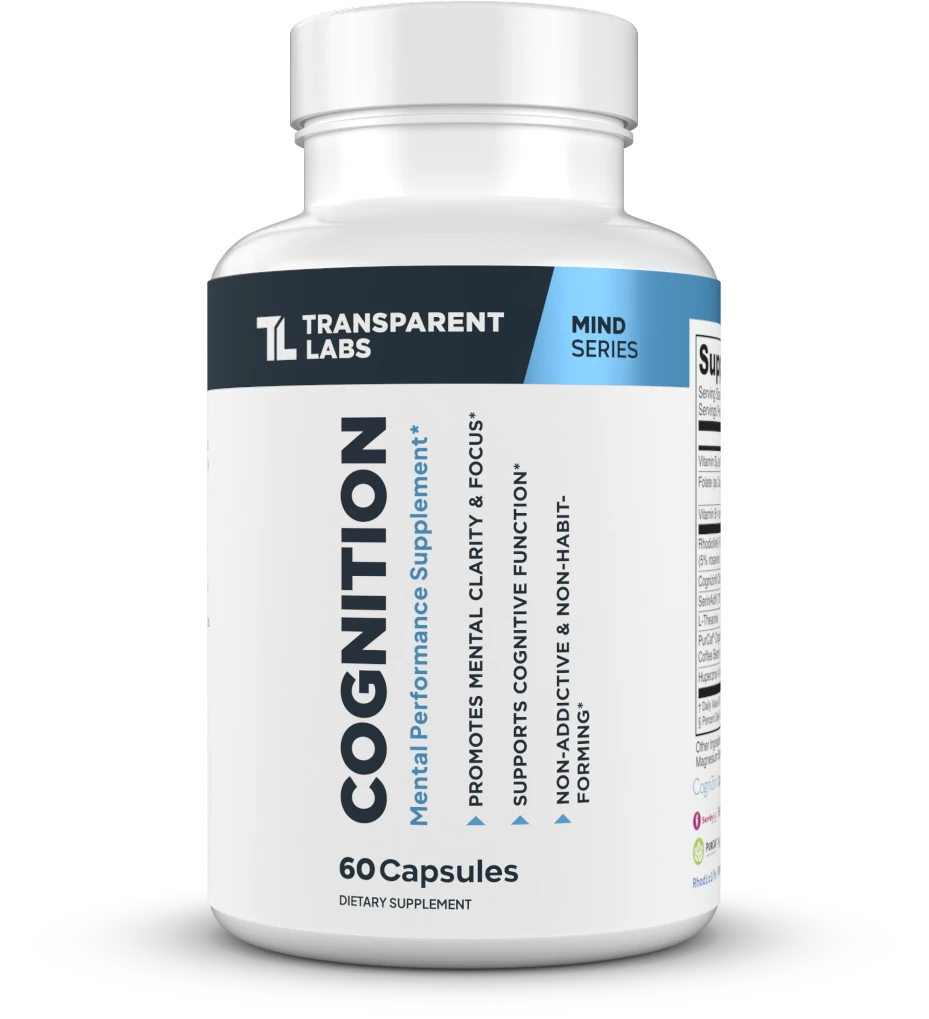 Transparent Labs Cognition | 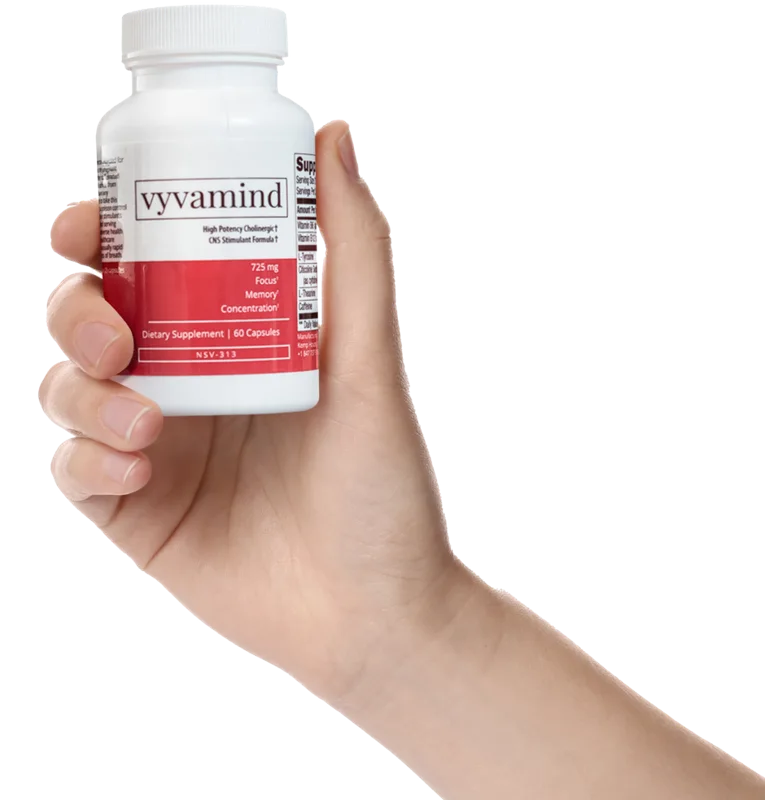 Vyvamind |  Nooceptin |
|---|---|---|---|---|
| Audit rating | 5.5/10 | 7.8/10 | 6.4/10 | 5.9/10 |
| Price per serving | $2.30 | $1.67 | $2.33 | $2.23 |
| Doses of Mind Lab Pro's ingredients | ||||
| L-Tyrosine | 142 mg175 mg N-acetyl L-tyrosine on the label1,858 mg below the study dose benchmark | Not in formula | 300 mg1,700 mg below the study dose benchmark | Not in formula |
| L-Theanine | 100 mgAt or above the study dose benchmark | 100 mgAt or above the study dose benchmark | 150 mgAt or above the study dose benchmark | 200 mgAt or above the study dose benchmark |
| Rhodiola Rosea | 50 mg3% rosavins, 1% salidrosides120 mg below the study dose benchmark | 600 mgRhodiolife, 5% rosavins, 1.8% salidrosideAt or above the study dose benchmark | Not in formula | 150 mg3% rosavins, 1% salidroside20 mg below the study dose benchmark |
| Phosphatidylserine | 100 mgfrom sunflower lecithin200 mg below the study dose benchmark | 140 mgSerinAid (200 mg at 70% phosphatidylserine)160 mg below the study dose benchmark | Not in formula | Not in formula |
| Citicoline | 250 mgCognizin (per website, not on label)At or above the study dose benchmark | 250 mgCognizinAt or above the study dose benchmark | 191 mg200 mg citicoline sodium on the label59 mg below the study dose benchmark | 191 mg200 mg citicoline sodium on the label59 mg below the study dose benchmark |
| Bacopa Monnieri | 150 mgfull-spectrum, 24% bacosides100 mg below the study dose benchmark | Not in formula | Not in formula | 150 mg40% bacosides100 mg below the study dose benchmark |
| Lion's Mane Mushroom | 500 mgorganic, mycelium and fruit body1,300 mg below the study dose benchmark | Not in formula | Not in formula | 400 mgfruiting body, 30% polysaccharides1,400 mg below the study dose benchmark |
| Maritime Pine Bark Extract | 75 mg95% proanthocyanidins75 mg below the study dose benchmark | Not in formula | Not in formula | Not in formula |
The products that share the most cognitive ingredients with Mind Lab Pro are shown first. Any product sharing at least two can be added.
Of the products that share the most ingredients with Mind Lab Pro, Hunter Focus is the closest match. It contains all eight of Mind Lab Pro's main ingredients and raises bacopa to 300 mg, theanine to 200 mg and tyrosine to 500 mg. The price is $3.00 a serving, and it also adds 100 mg of caffeine. None of its plant extracts say how strong they are, and its return policy offers nothing once you open the bottle.
At $2.23 a serving, Nooceptin is the caffeine-free alternative. Its lion's mane uses fruiting body only, its bacopa is a 40 percent extract, and both theanine and rhodiola come in higher amounts. The tradeoffs are about 59 mg less citicoline, once the sodium in Nooceptin's salt is counted, and an unopened-bottles-only return policy.
Vyvamind is another option if caffeine doesn't bother you. It scores 6.4, was cheaper than Mind Lab Pro on its Amazon store when we checked, though not on its own site, and shares only citicoline, theanine and tyrosine. Qualia Mind shares six ingredients, costs $7.95 and provides one-fifth as much citicoline as Mind Lab Pro.
Mind Lab Pro's advantage over these products is its paperwork, not its doses. You can check every label amount, and its guarantee still applies after you open a bottle. Compared with Nooceptin, that costs a little more a serving. Compared with Hunter Focus, it costs less and leaves out the caffeine.
Price and where to buy
These prices assume one bottle and two capsules daily. A monthly subscription costs less, and the four-month subscription, which ships free, brings the daily cost lowest of the direct options.3
Amazon also lists the product under a Mind Lab Pro brand page. When we checked, the only offer was from a third-party seller named Amleash. It was marked non-returnable and cost more than the official store.39 That's why Amazon isn't in the price table. The official store is the only option carrying the guarantee.
The brand's help center names mindlabpro.com and performancelab.com as its guaranteed authentic sources. It also says authorized resellers must identify themselves as such, and the Amazon seller doesn't state either way.37
- mindlabpro.com direct
- Listed price
- $69.00
- Per serving
- $2.30
- Status
- In stock
What studied amounts cost separately
Citicoline and theanine are the two ingredients here that reach a studied amount. Each of the eight is also sold on its own as a single-ingredient supplement, so you can take every one at the amount the studies started from, including 250 mg of bacopa and 1,800 mg of lion's mane fruiting body.
Our picks price that for each ingredient. These are the products we'd buy on quality, not the cheapest tubs available.
Phosphatidylserine 300 mg
3 capsules of 100 mg
Lion's mane 1,800 mg
3 capsules of 700 mg, rounded up
Bought separately
$4.96 a day ($148.71 for 30 servings)
Mind Lab Pro at mindlabpro.com
$2.30 a day ($69.00 for 30 servings)
Buying separately costs $2.66 a day more ($79.71 for 30 servings).
That total isn't a fair comparison, because six of Mind Lab Pro's eight come in under the amounts in the list. The two that reach a studied amount, citicoline and theanine, cost less a day bought separately. Adding phosphatidylserine, bacopa and lion's mane at their studied amounts brings the total close to Mind Lab Pro's price, with all five at full strength. The picks carry the current figures.
What other reviewers say

Innerbody Research
Written review · Daniel Imperiale · Updated Jun 11, 2024
“Ultimately, Mind Lab Pro seems to prioritize your safety over mind-blowing efficacy but still gives you enough flexibility to improve your cognition somewhat.”

SOMA Analytics
Written review and video · James Dixon · Updated Jan 29, 2024
“Mind Lab Pro really does seem to be one of the best nootropics money can buy.”

Athletic Insight
Written review · Aug 13, 2026
“Mind Lab Pro exceeded my realistic expectations. The improvements in working memory and sustained focus justified the cost for my specific situation, freelance writing with multiple concurrent projects.”

WholisticResearch
Written review · Jacob Kovacs · Oct 3, 2026
“our team found Mind Lab Pro to be an exceptional nootropic supplement that delivers on its promises.”
Innerbody is the outlier and the reviewer closest to our view. It gives Mind Lab Pro 3.25 out of 5, includes "most ingredients are underdosed" among the cons and notes that the company's trials "have the potential for bias."33 SOMA Analytics doesn't give a score and calls it one of the best nootropics money can buy. Its video presenter took the product for 30 days, said the effect "was not profound" and suggested it for people new to nootropics.34 Athletic Insight reports using it for 90 days and says it "exceeded my realistic expectations," without assigning a score.35 WholisticResearch gives it 4.8 out of 5 after a one-month test involving three people.36
What buyers report
What buyers wrote
“Since taking it, my recall and comprehension have improved.”
“This product made me feel very unwell, it caused me to experience very strong anxiety symptoms.”
Safety notes
Mind Lab Pro contains no caffeine or other stimulant, so the main concern in many brain-supplement reviews doesn't apply. You can take it with coffee without raising the stimulant dose. Bacopa is the ingredient most likely to cause trouble because it can upset the stomach at the 300 mg used in trials.16 Mind Lab Pro provides 150 mg, and stomach upset is still possible. Its 2.5 mg of B6 is modest, and 7.5 mcg of B12 is well within the normal range. If you take levodopa for Parkinson's disease, ask your doctor before taking Mind Lab Pro, because citicoline's prescription label warns that the two interact, as our citicoline guide explains. Its tyrosine can also interact with levodopa, MAO inhibitor antidepressants and thyroid medication, so ask about those too.
Lion's mane is a mushroom, so avoid it if mushrooms cause problems for you. Rhodiola and pine bark are unlikely to do much either way at these amounts. One strongly negative Trustpilot review reports anxiety, though we can't know whether the product caused it.32 Ask a doctor before taking it if you use medication, are pregnant or breastfeeding, or manage a health condition. We're researchers, not doctors.
Final thoughts
Mind Lab Pro pairs a label you can check with cautious doses. Its two properly dosed ingredients, citicoline and theanine, are among the ones most worth having, and its trials of this exact bottle are rare, despite their small groups and company funding. The lab-report system is genuine, though the lab remains unnamed. Lion's mane, bacopa, phosphatidylserine and tyrosine still come in under the amounts that showed results, and taking more capsules doesn't close that gap at a sensible price.
If you want a label you can check and a guarantee that covers an opened bottle, Mind Lab Pro is a reasonable buy, though you can buy its five ingredients worth having separately at full strength for about the same a day. Don't choose it mainly for lion's mane or bacopa. You can buy either separately at full strength. If you buy Mind Lab Pro, start with its two capsules in the morning and give it the 30 days the trials used before judging it.
FAQ
Does Mind Lab Pro contain caffeine?
Is Mind Lab Pro clinically proven?
Can you take four capsules a day?
Does Mind Lab Pro have a money-back guarantee?
Where can you buy Mind Lab Pro?
How long does Mind Lab Pro take to work?
Mind Lab Pro or Vyvamind?
Is Mind Lab Pro safe?
Sources
44 sources cited
- Mind Lab Pro ingredients page, with the full supplement facts as text, accessed Oct 19, 2026. mindlabpro.com/pages/ingredients
- Mind Lab Pro official supplement facts panel image (2 NutriCaps per serving, 30 servings), accessed Oct 19, 2026. mindlabpro.com label image
- Mind Lab Pro product page. $69.00 one-time, subscription $62.10, four-month supply $207.00, review widget showing 4.5 and 4.8 from 2,655 reviews, trial, testing and guarantee claims. Accessed Oct 19, 2026. mindlabpro.com product page
- Mind Lab Pro shipping and returns page. 30-day money-back guarantee terms (first order, one bottle, claim within 60 days of delivery, refund minus shipping). Accessed Oct 19, 2026. mindlabpro.com/pages/shipping-returns
- Mind Lab Pro help center, "What is the MLP dosage?". 2 to 4 capsules a day. Accessed Oct 19, 2026. help.mindlabpro.com
- Mind Lab Pro quality page. Third-party batch testing, certificate lookup by batch number, made in New Jersey. Accessed Oct 19, 2026. mindlabpro.com/pages/quality
- Opti-Nutra, Standards for Third-Party Testing (PDF). Potency, microbial and heavy-metal specifications. Accessed Oct 19, 2026. standards_for_third-party_testing.pdf
- Mind Lab Pro studies page. "47% Reduction in information processing time", funding statements, "Conducted independently by the University of Leeds". Accessed Oct 19, 2026. mindlabpro.com/pages/studies
- Abbott-Imboden C, Gonzalez Y, Utley A. Efficacy of the nootropic supplement Mind Lab Pro on memory in adults. Double blind, placebo-controlled study. Hum Psychopharmacol, 2023. 36 on Mind Lab Pro, 13 on placebo, 30 days. Funded by Opti-Nutra. PMID 37194920
- Utley A, Gonzalez Y, Abbott Imboden C. The efficacy of a nootropic supplement on information processing in adults. A double blind, placebo controlled study. Biomed J Sci Tech Res, 2023. 61 on Mind Lab Pro, 44 on placebo, 30 days. "Supported by a grant from ics-digital." DOI 10.26717/BJSTR.2023.49.007746
- O'Reilly D, Bolam J, Delis I, Utley A. Effect of a plant-based nootropic supplement on perceptual decision-making and brain network interdependencies. A randomised, double-blinded, and placebo-controlled study. Brain Sci, 2025. 60 days, no improvement in choice accuracy or reaction time. Funded by Performance Lab Group. PMID 40149748
- PubMed search "mind lab pro", 1 result, run Oct 19, 2026. pubmed.ncbi.nlm.nih.gov
- McGlade E, et al. Improved attentional performance following citicoline administration in healthy adult women. Food Nutr Sci, 2012. 250 or 500 mg a day for 28 days, 60 women aged 40 to 60. DOI 10.4236/fns.2012.36103
- McGlade E, et al. The effect of citicoline supplementation on motor speed and attention in adolescent males. J Atten Disord, 2019 (online 2015). 250 or 500 mg a day for 28 days, 75 participants, dose groups pooled. PMID 26179181
- Nakazaki E, et al. Citicoline and memory function in healthy older adults. A randomized, double-blind, placebo-controlled clinical trial. J Nutr, 2021. 500 mg a day for 12 weeks, 100 adults aged 50 to 85. PMID 33978188
- Stough C, et al. The chronic effects of an extract of Bacopa monniera (Brahmi) on cognitive function in healthy human subjects. Psychopharmacology, 2001. 300 mg of a standardized extract for 12 weeks. PMID 11498727
- Kongkeaw C, et al. Meta-analysis of randomized controlled trials on cognitive effects of Bacopa monnieri extract. J Ethnopharmacol, 2014. Nine trials of standardized extracts, at least 12 weeks. PMID 24252493
- Mori K, et al. Improving effects of the mushroom Yamabushitake (Hericium erinaceus) on mild cognitive impairment. A double-blind placebo-controlled clinical trial. Phytother Res, 2009. 3,000 mg a day of tablets made of 96% dried fruiting body powder, about 2,880 mg of powder, for 16 weeks, 30 adults aged 50 to 80. PMID 18844328
- Docherty S, et al. The acute and chronic effects of lion's mane mushroom supplementation on cognitive function, stress and mood in young adults. Nutrients, 2023. 1,800 mg a day for 28 days, 41 adults aged 18 to 45. PMID 38004235
- Crook TH, et al. Effects of phosphatidylserine in age-associated memory impairment. Neurology, 1991. 300 mg a day of bovine cortex phosphatidylserine for 12 weeks, 149 adults. PMID 2027477
- Kato-Kataoka A, et al. Soybean-derived phosphatidylserine improves memory function of the elderly Japanese subjects with memory complaints. J Clin Biochem Nutr, 2010. 100 or 300 mg a day for 6 months, 78 adults aged 50 to 69. PMID 21103034
- Colzato LS, et al. Working memory reloaded. Tyrosine repletes updating in the N-back task. Front Behav Neurosci, 2013. A single 2.0 g dose. PMID 24379768
- Gerolymos C, et al. Cognitive and affective effects of L-theanine. A systematic review and meta-analysis of 31 randomized trials. Mol Psychiatry, 2026. PMID 42410082
- Spasov AA, et al. A double-blind, placebo-controlled pilot study of the stimulating and adaptogenic effect of Rhodiola rosea SHR-5 extract on the fatigue of students caused by stress during an examination period. Phytomedicine, 2000. 100 mg a day for 20 days. PMID 10839209
- Ryan J, et al. An examination of the effects of the antioxidant Pycnogenol on cognitive performance in an elderly population. J Psychopharmacol, 2008. 150 mg a day for 3 months, 101 adults aged 60 to 85. PMID 18701642
- Clarke R, et al. Effects of homocysteine lowering with B vitamins on cognitive aging. Meta-analysis of 11 trials with cognitive data on 22,000 individuals. Am J Clin Nutr, 2014. No effect in people who weren't deficient. PMID 24965307
- ConsumerLab. Reviews and information for Mind Lab Pro. One product "voluntarily tested and Approved for quality in our Quality Certification Program". Test date members-only. Accessed Oct 19, 2026. consumerlab.com
- Labdoor. Mind Lab Pro product page. "This product is being tested", no grade. Accessed Oct 19, 2026. labdoor.com
- NSF International. Certified dietary supplement listings, search for Mind Lab Pro. No matching products found. Accessed Oct 19, 2026. info.nsf.org
- USP. USP Verified products, search for Mind Lab Pro. No listing. Accessed Oct 19, 2026. quality-supplements.org
- Illuminate Labs. Certification and formulation services page, and its own Mind Lab Pro review. Accessed Oct 19, 2026. illuminatelabs.org
- Trustpilot reviews of mindlabpro.com. 4.2/5 from 82 reviews, 21% one-star, newest review Sep 2026. Accessed Oct 19, 2026. trustpilot.com
- Imperiale D. Mind Lab Pro review. Innerbody Research, updated Jun 11, 2024. Editor's rating 3.25 out of 5. Accessed Oct 19, 2026. innerbody.com
- Dixon J. Mind Lab Pro review. SOMA Analytics, updated Jan 29, 2024, with the channel's 30-day video (Feb 23, 2023). No numeric score. Accessed Oct 19, 2026. soma-analytics.com
- Athletic Insight. I Tried Mind Lab Pro For 90 Days (2026 Review). Dated Aug 13, 2026. No named author or numeric score. Accessed Oct 19, 2026. shop.athleticinsight.com
- Kovacs J. Mind Lab Pro review 2026. WholisticResearch, published Oct 3, 2026. Overall rating 4.8 out of 5. Accessed Oct 19, 2026. wholisticresearch.com
- Mind Lab Pro help center, "Where can I buy Mind Lab Pro?" and the third-party authenticity article. Accessed Oct 19, 2026. help.mindlabpro.com
- Mind Lab Pro formula updates page. V4 launched 10/18. Accessed Oct 19, 2026. mindlabpro.com/pages/formula-updates
- Amazon listing B07H5354D8 (Mind Lab Pro brand page). 4.0/5 from 1,241 global ratings, one offer, sold by Amleash and shipped by Amazon, marked non-returnable. Checked with delivery location New York 10001, Oct 19, 2026. amazon.com
- Hidese S, et al. Effects of L-theanine administration on stress-related symptoms and cognitive functions in healthy adults. A randomized controlled trial. Nutrients, 2019. 200 mg a day for 4 weeks, 30 adults. PMID 31623400
- US patent 11583546B2 (Kyowa Hakko Bio and University of Utah Research Foundation). Reports the adolescent trial's 250 mg and 500 mg arms separately, and the 250 mg arm did not differ from placebo on the CPT-II attention measures. Accessed Sep 18, 2026. US11583546B2
- Raghav S, et al. Randomized controlled trial of standardized Bacopa monniera extract in age-associated memory impairment. Indian J Psychiatry, 2006. 125 mg twice a day for 12 weeks, improved mental control, logical memory and paired-associate learning. PMID 20703343
- Dassanayake TL, et al. Dose-response effect of L-theanine on psychomotor speed, sustained attention, and inhibitory control. A double-blind, placebo-controlled, crossover study. Nutr Neurosci, 2023. Single doses of 100, 200 or 400 mg, 32 young adults. PMID 36263942
- Darbinyan V, et al. Rhodiola rosea in stress induced fatigue. A double blind cross-over study of a standardized extract SHR-5 with a repeated low-dose regimen on the mental performance of healthy physicians during night duty. Phytomedicine, 2000. 170 mg a day for two weeks, 56 physicians. PMID 11081987
Where this data comes from
- Product image
- Official Mind Lab Pro product image, used for review
- Price source
- mindlabpro.com $69.00 for 30 servings. Amazon third-party offer dearer and non-returnable
Our scoring method, weights, and the rules that keep affiliate money away from scores are documented on the editorial process page.
Top Rated Nootropics is an independent research and review platform. We are passionate supplement researchers, not medical professionals. Always consult a qualified healthcare provider before starting any supplement regimen. These statements have not been evaluated by the Food and Drug Administration. These products are not intended to diagnose, treat, cure, or prevent any disease.